


From The Register-Herald
BECKLEY — For the 126th year, the National Audubon Society is organizing the annual Christmas Bird Count. On Dec. 20, birders and nature enthusiasts in Fayette County will join this tradition that has lasted over twelve decades, in the Oak Hill circle. Data collected by participants over the years contribute to one of only two large existing pools of information notifying ornithologists and conservation biologists of what conservation action is required to protect birds and the places they need.
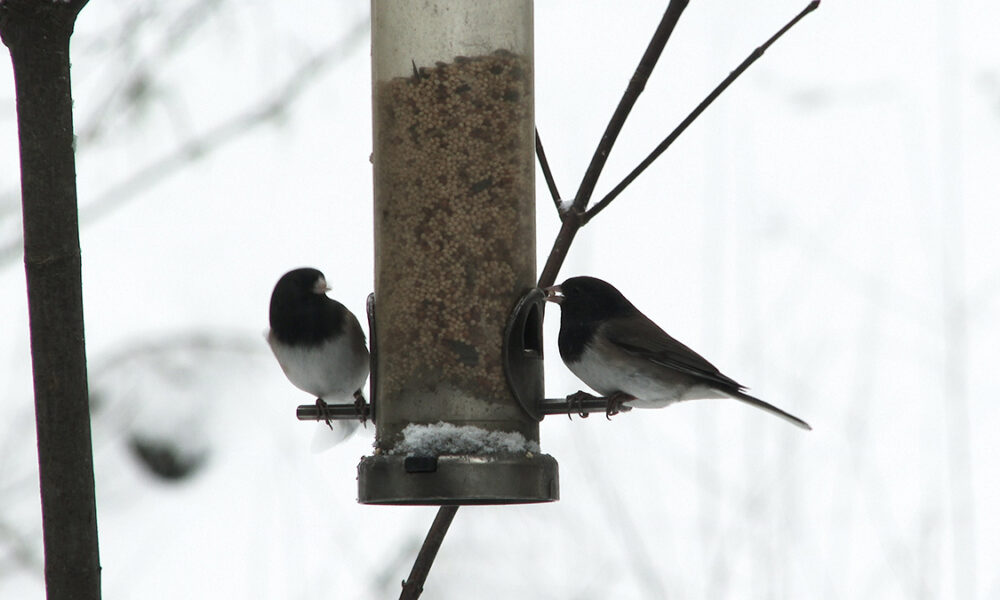
A huge thank you to last year’s WVOH CBC participants. With their enthusiasm, we tallied 2,084 total birds and an impressive 57 species — a species total that is slightly above average in our circle’s 45-year history. We had some truly historic moments, including our first records of two species: the American Redstart and Ovenbird, observed and reported by Anna Fliger, Jacob Feltner, and Ashton Hudson. What a treat! We also set new high-count records within our circle, with 326 Dark-eyed Juncos (the highest count of any species that year), 19 Winter Wrens, 12 Common Ravens, and 9 Red-headed Woodpeckers. There’s so much more territory to cover, especially in the northwest quarter of the circle. We’re hopeful more folks will join the count this year.
The Audubon CBC is one of the longest-running wildlife censuses in the world. Each individual count takes place in a 15-mile-wide circle and is led by a compiler responsible for organizing volunteers and submitting observations directly to Audubon. Within each circle, participants tally all birds seen or heard that day — not just the species but total numbers to provide a clear idea of the health of bird populations.
“The Audubon Christmas Bird Count is a great opportunity for everyone to be a part of community science in the name of protecting birds,” said Dr. Brooke Bateman, senior director of climate and community science for Audubon. “Your Christmas Bird Count observations help scientists discover trends about bird species that inform conservation. Ever since the first count in 1900, participating in the Audubon CBC has been a fun and meaningful way to spend time outdoors for anyone and everyone.”
When combined with other surveys like the Breeding Bird Survey, the Audubon CBC provides a picture of how the continent’s bird populations have changed in time and space over the past hundred years. The long-term perspective is vital for conservationists. It informs strategies to protect birds and their habitat and helps identify environmental issues with implications for people as well. For example, in 2019, Science published a study using decades of Audubon CBC data and other datasets to describe a grim picture: a steady loss of nearly three billion North American birds since 1970. Over the years, Audubon CBC data have been used in more than 300 peer-reviewed articles. Audubon CBC data are also used to measure how birds are responding to climate change. A 2022 Audubon study used 90 years of Christmas Bird Count data to show how birds have shifted amid a century of major environmental changes. By tracking how bird ranges have shifted over time, conservation efforts can be prioritized in areas that are important for birds today and in a climate-altered future. With two-thirds of North American bird species at increasing risk of extinction by the end of this century, Audubon CBC data are more important than ever for effective conservation.
Birders of all ages and abilities are welcome to contribute to this fun, nationwide community science project, which provides ornithologists with a crucial snapshot of our native bird populations during the winter months. Volunteers follow assigned routes, go to destinations, or simply spend time watching their own yard bird feeders, noting the species and counting every bird they see.
Interested birders must arrange with the count compiler in advance to participate. To sign up for the WVOH CBC, please contact circle compiler Rachel Davis at [email protected]
and go to birding-wv.com/events/christmas-bird-count for details.
Birding-wv.com represents the annual New River Birding & Nature Festival (est. 2002) and the New River Birding & Nature Center outdoor classroom (est. 2008). The Festival is a non-profit fundraising event for the local 501(c)(3) Fayette County Education Fund, Inc., to support the Fund’s student environmental education and leadership training programs. The Center’s Wetlands Boardwalk and Woodland Trail, located within Wolf Creek Park off Route 16 between Oak Hill and Fayetteville, was voted the #1 Birdwatching Spot in the Best of the Blue Ridge: 2022 Readers’ Choice Awards. The Center also serves as a MAPS station to monitor avian productivity and survivorship for the Institute for Bird Populations, and it holds a MOTUS tower for scientific tracking of birds with radio transmitters. The Center’s boardwalk and trails are maintained by donations and volunteers. While exploring, leave only soft footprints and take only litter.
The National Audubon Society protects birds and the places they need, today and tomorrow. Audubon works throughout the Americas using science, advocacy, education, and on-the-ground conservation. State programs, nature centers, chapters, and partners give Audubon an unparalleled wingspan that reaches millions of people each year to inform, inspire, and unite diverse communities in conservation action. A nonprofit conservation organization since 1905, Audubon believes in a world in which people and wildlife thrive. To look for other count circles, go to Audubon’s map of CBC circles and learn more at audubon.org.
See more from The Register-Herald