


By Ashley Perham
for HDMedia
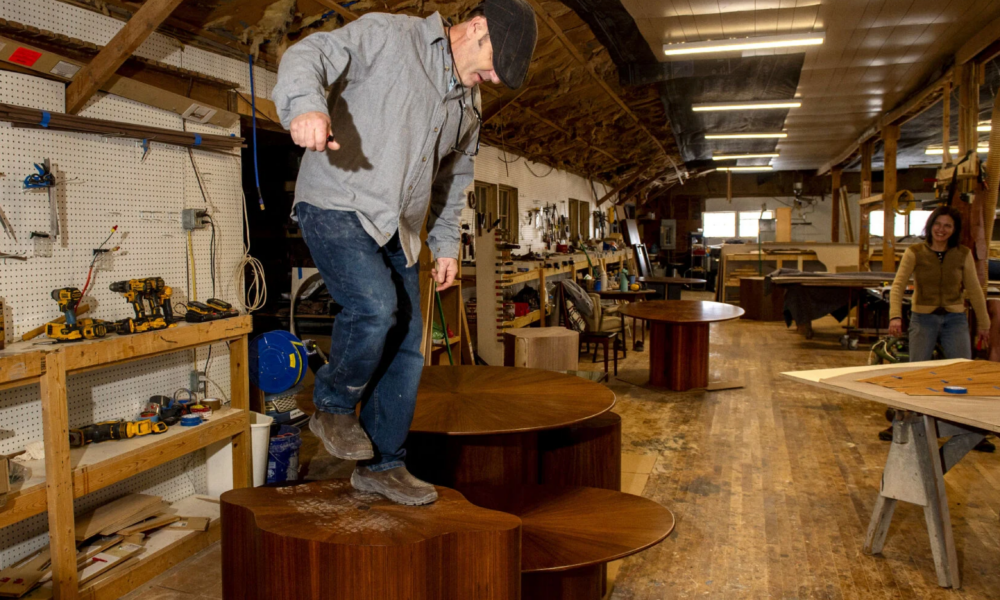
Aaron Saxton builds wooden tables so sturdy he feels perfectly comfortable jumping on them.
“Why can’t you do that to a normal table?” he asked, leaving dusty boot prints on the top of one of his new coffee tables. “It must be made out of junk if you can’t do that.”
The South Charleston carpenter originally from New Zealand and his wife, Maria Armada, started their business History Never Repeats to refinish and sell mid-century furniture Armada found.
They’re impressed by the quality of mid-century furniture and worry that it’s getting a bad reputation due to furniture manufacturers who are copying the design using cheap materials for modern consumers.
“Back then … when you bought furniture, you were buying it for life,” said Armada, who is from South Charleston. “It could be [as] expensive as a car to [buy] furniture for your house.”
Saxton became interested in the construction and design of the furniture and learned from Ed Hillenbrand, a South Charleston woodworker.
According to Armada, creating new furniture designs is difficult since manufacturers in Asia replicate the designs and sell them cheaper.
So Saxton began building custom wooden doors in 2015, which took too much work to be duplicated by other manufacturers.
Some of the doors have a sunburst look with wood triangles radiating from the door handle. It was this sunburst idea that led Saxton to his current project — radial pattern tables.
Radial tables
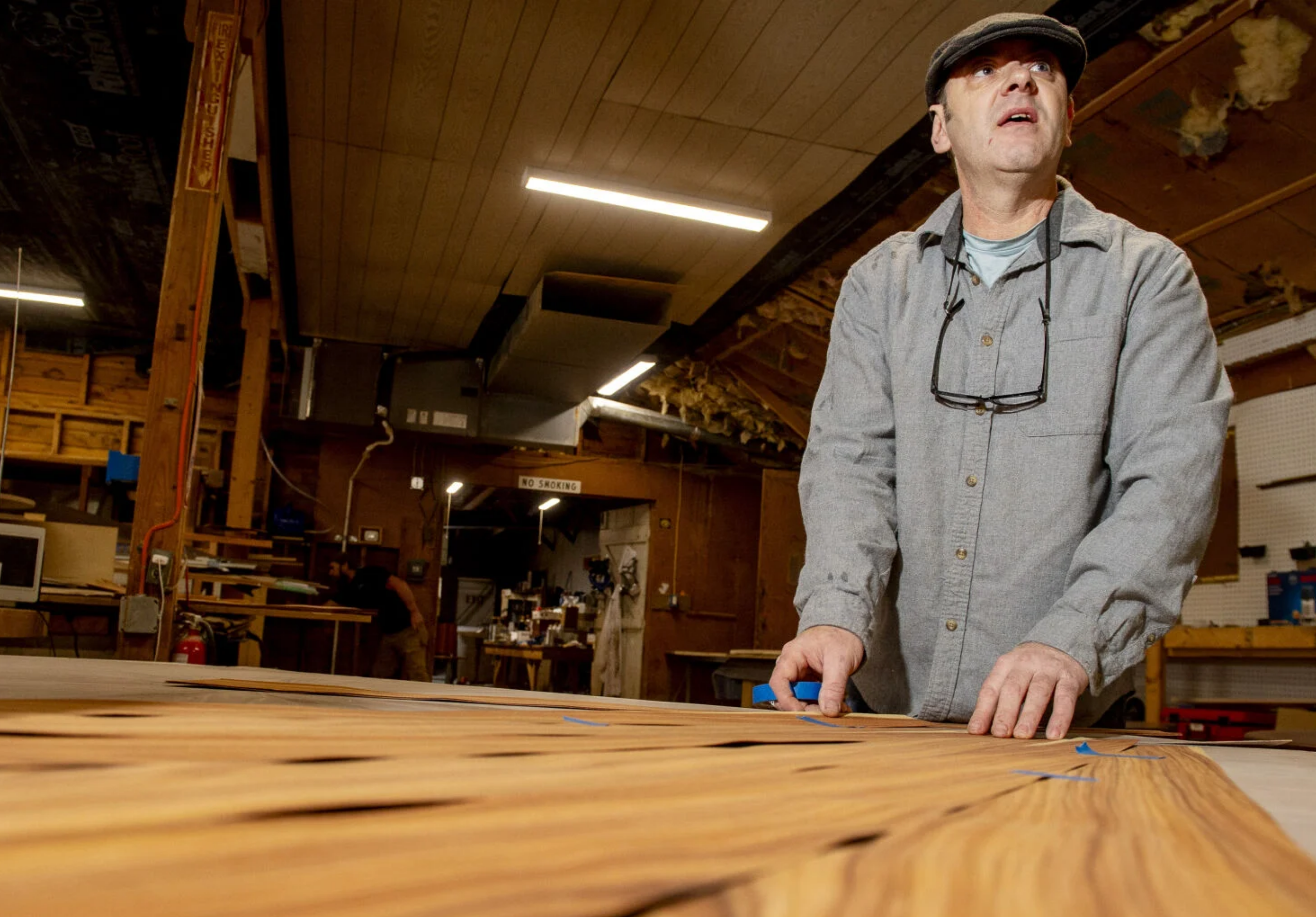
The tables — which took eight prototypes over six months to get right — feature triangular cuts of wood veneer radiating from a small central circle, similar to slices of a pizza, Saxton says.
This concept is not new to tablemaking or furniture design, but it’s Saxton’s amount of triangles that sets the tables apart.
Saxton said that the fewer the amount of triangles in the wood, the more geometric the tables look. While that pattern is not bad, Saxton prefers a different look.
“Wood’s supposed to flow,” he said. “It’s supposed to organically move with your eye.”
Instead of seeing triangles, he sees “a ribbon or wave” flowing through the wood, connecting the pieces together.
Wood veneers
The tables take a week to make in their 6,000-square-foot workshop in South Charleston.
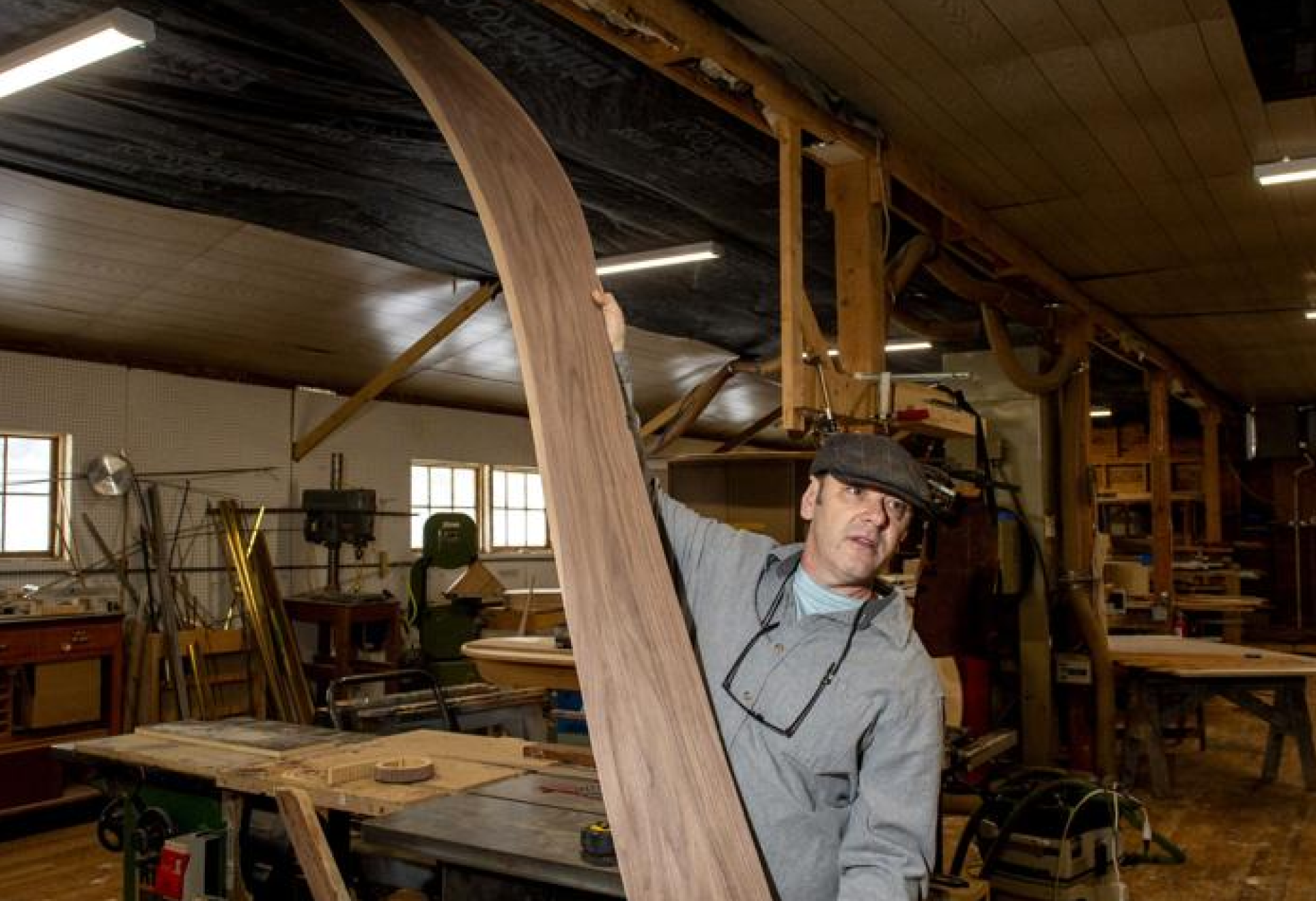
First, Saxton inspects the thin sheets of lumber, such as rosewood and walnut, that he gets from throughout the country. The sheets come from old-growth trees that are too valuable to chop into wood. Some even comes from a sawmill north of Sissonville.
“We have to make sure every single sheet is blemish-free,” Saxton said, showing off some new 10-foot pieces of walnut he has in stock.
Blemish-free means there were no branches on the length of the wood to create knots. The wood typically comes from between the tree roots and its first branches.
While the wood sheets, or veneers, are thin, they are still several times thicker than veneers that cover cheap furniture. Those veneers are often thinner than a sheet of paper, Saxton said, explaining that doubling the thickness of a veneer quadruples its strength.