



By Jim Estep and Matt Ballard
West Virginia stands at an important crossroads in its economic development journey. As the global economy becomes increasingly digital, data centers have emerged as critical infrastructure—quietly powering everything from healthcare and banking to manufacturing, education, and national security. It is no surprise that our state is being considered more seriously for these investments. The question before us is not whether data centers are coming, but whether West Virginia will position itself to benefit from them in a way that is responsible and aligned with our values. There is much to support in the growth of the data center industry.
It is also worth noting that data centers are not an abstract or entirely new concept for West Virginia. Data centers already operate today at the I-79 Technology Park in Fairmont and at the West Virginia Regional Technology Park in South Charleston. While these are smaller in scale than the hyperscale projects now being discussed nationally, they perform the same essential functions and have coexisted successfully with surrounding communities for years. They provide a practical, real-world example that this type of infrastructure can operate responsibly, quietly, and safely right here in our state. These facilities bring significant capital investment, often measured in the hundreds of millions or even billions of dollars. They broaden the local tax base, strengthen public finances, and create demand for skilled trades during construction as well as long-term technical, engineering, and facilities jobs. Just as importantly, data centers can serve as anchors—attracting complementary industries, research activity, and workforce development opportunities that help diversify regional economies that have long sought stability beyond boom-and bust cycles.
At the same time, it is reasonable for citizens and leaders to raise questions around any new development. Concerns around water usage, power demand, and the potential strain on public infrastructure deserve thoughtful consideration. These are not obstacles to progress; they are signals that the public expects growth to be managed wisely. Fortunately, these concerns are not new, nor are they unsolvable. Modern data center design has evolved rapidly. Many facilities now use advanced cooling technologies that dramatically reduce water consumption, including closed-loop systems and air-cooled designs. Others are sited intentionally to avoid competition with residential or agricultural water needs. Transparency around water sourcing and consumption, coupled with enforceable performance standards, can ensure that communities understand how resources are being used and protected.
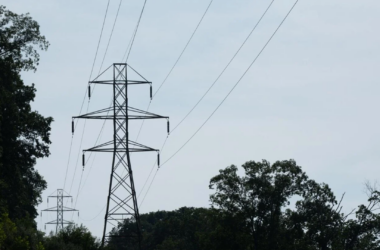
Infrastructure investment is another frequent concern, particularly when it comes to electricity generation and transmission. Here, careful planning matters. Data centers should be recruited to locations where existing infrastructure can be leveraged, or where private investment can o\set the need for public ratepayer-funded upgrades. Smart policy can ensure that growth does not translate into higher utility bills for households, but instead strengthens the overall system through modernization and resilience. West Virginia has already taken an important step forward in this regard. The Governor and Legislature deserve credit for enacting microgrid legislation that provides new tools for energy reliability and innovation. Microgrids can allow large energy users like data centers to invest in their own generation and storage, reducing strain on the broader grid while improving resilience for surrounding communities. This kind of forward-thinking policy sends a strong signal that West Virginia understands both the opportunity and the responsibility that come with hosting next-generation infrastructure.
Equally important is community engagement. Successful projects are those that involve local leaders early, communicate, and make commitments that can be measured and enforced. West Virginia has always powered America in one form or another. Data centers represent a new chapter in that legacy—one rooted in digital infrastructure rather than physical extraction, but no less vital to the nation’s future. By welcoming this industry with clear standards, smart policy, and respect for local concerns, we can ensure that growth is both economically meaningful and publicly supported. This is not a choice between progress and protection. With the right approach, West Virginia can have both.
Jim Estep is President and CEO at High Technology Foundation I79 Technology Park and Matt Ballard is CEO and Executive Director of West Virginia Regional Technology Park.