

Children have opportunity to learn how West Virginia judicial branch of government works
West Virginia Press Association
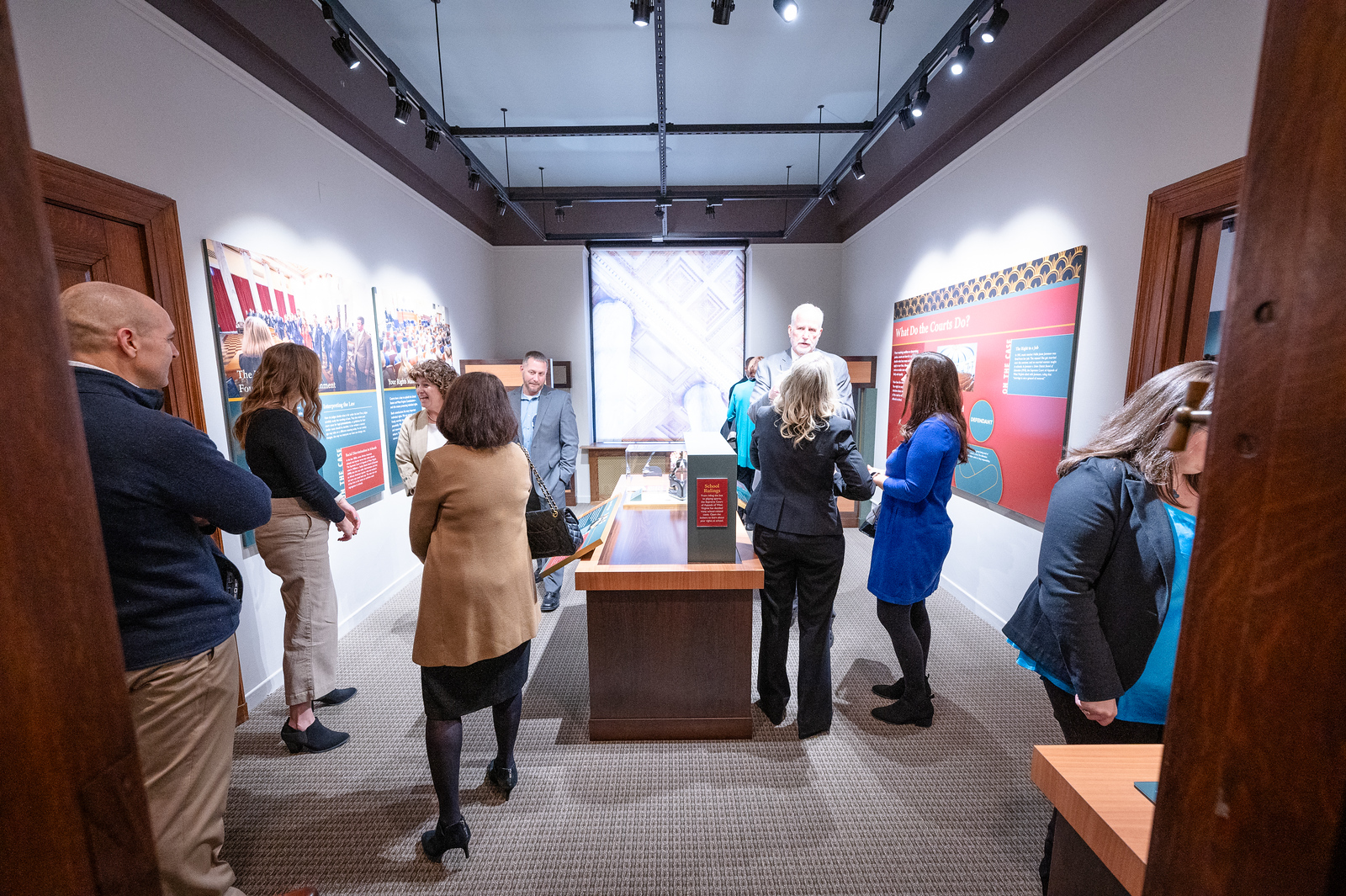
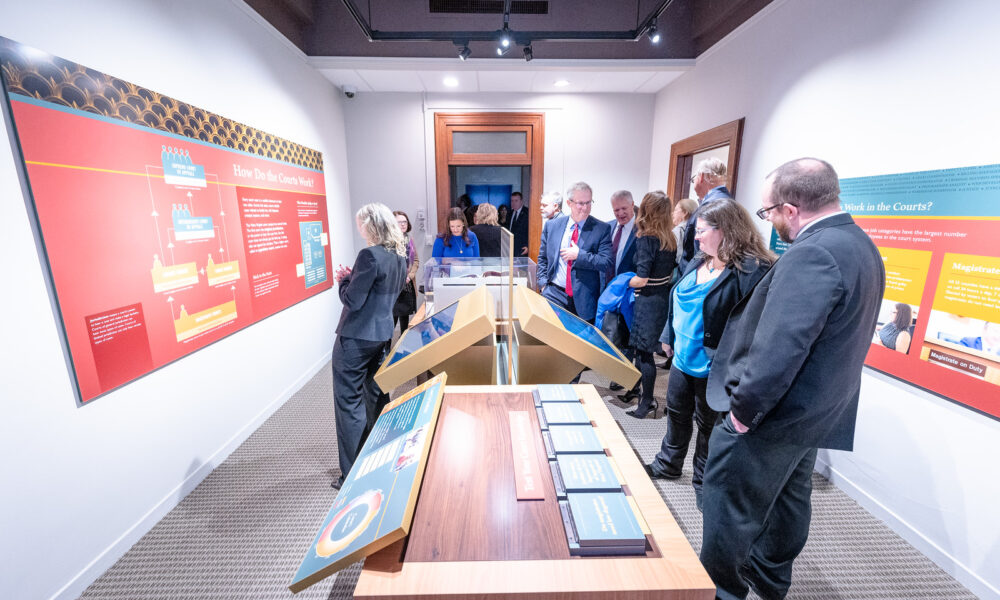
CHARLESTON, W.Va. – On Dec. 7, The Supreme Court of Appeals of West Virginia held a grand opening ceremony for the new West Virginia Judicial Learning Center on the third floor of the Capitol’s East Wing.
The center was designed to teach – in a practical and fun way – how the West Virginia judicial branch of government works.
“With this, we will no longer be a mysterious branch,” said Chief Justice Beth Walker. “We try to tell students and the public about our branch, what we do in the judiciary. A couple of years ago, we decided we could do a little bit more. That’s how we came up with the idea.
“State courts hear 95 percent of cases filed in courts across the nation, including federal courts. State courts are where people are. We have as much contact with people in the state of West Virginia as any branch of government,” Chief Justice Walker said. “We help people. We help people who are in trouble who have been wronged, we help people who are seeking some kind of redress, and we help people stay safe. We help children find a place where they can be safe and secure. That’s why we want people to understand more.”
The center has informative wall panels and interactive touchscreen exhibits that explain basic legal concepts and terms. There is information about careers in the courts, landmark West Virginia cases, and the history and structure of West Virginia courts. There are also electronic exhibits explaining how cases flow through the lower and appellate courts and about how judges weigh evidence.
A growing number of courts in other states have or are building such centers to help citizens learn about the rule of law, the judicial branch of government, and how courts work for them.
Justice Haley Bunn said, “As a mom of two young girls, I know outreach and education are so important. It needs to reach children where they are.” Her daughters, ages 9 and 4, visited the center before the opening and intuitively knew how to operate the technological exhibits as well as the hands-on exhibits designed for their age groups, she said.
Justice John Hutchison said he officiated a wedding in the Supreme Court Chamber last week and, as wedding guests were waiting for the ceremony to start, they visited the learning center. Although the center was designed for children, older guests enjoyed it and said they learned something.
Justice Tim Armstead said he has always been surprised by the number of people who work in the Capitol who have never visited the Supreme Court. The learning center helps make the judicial branch more accessible.
“I hope that people will be inspired by this. This branch is as important as the others. It is incredibly important that we inspire young people to be a part of that,” Justice Armstead said.
The center is the culmination of two years of work by an in-house committee led by Chief Justice Walker and Justice Bunn.
“The new Judicial Learning Center would not have been possible without the enthusiastic support of my four wonderful colleagues and the hard work of a dedicated, multi-disciplinary team from our Administrative Office. Special thanks to several West Virginia teachers who helped us with how best to explain legal concepts to West Virginians of all ages,” said Chief Justice Walker.
Two of those teachers attended the grand opening.
“It’s fantastic to know students we are teaching now are going to be able to come here, and students for years to come will be able to learn about the judicial system,” said Brian Allman, a teacher at Buckhannon Upshur Middle School who won a 2019 Milken Educator award.
“I think it’s phenomenal. It’s about the entire state. There is something for everyone,” said Adena Barnette Miller, a Ripley High School teacher who was the 2021 West Virginia History Teacher of the Year and a 2019 James Madison Foundation Congressional Fellow.
The center is open to the public any time the Capitol is open. For more information, contact [email protected].
This project has been made possible in part by grants from the West Virginia Bar Foundation, the American Board of Trial Advocates, the Greater Kanawha Valley Foundation, and the National Endowment for the Humanities (NEH) and the federal American Rescue Plan Act of 2021 through the West Virginia Humanities Council.