

By Office of Communications
For Concord University
Athens — There are lots of lessons physician assistant and nursing students must master before beginning their careers, but some are tough to teach from a book or website. They require hands-on skills and real-world experience.
That’s where initiatives like Concord University’s Standardized Patient Program become extremely valuable.
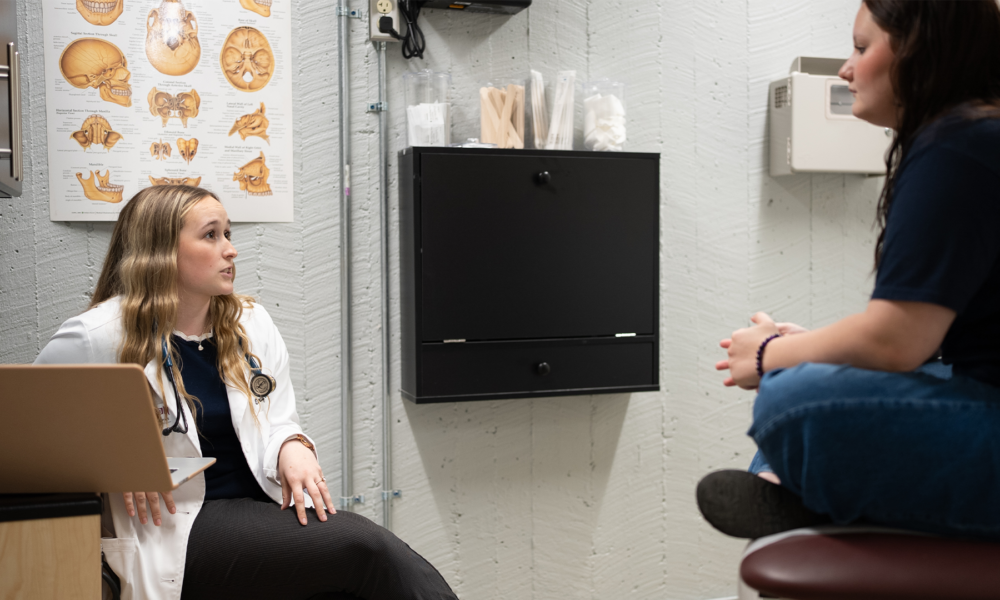
This innovative approach trains actors to play the parts of patients in simulated clinical scenarios to create a realistic, safe learning environment for healthcare learners. The process assists students in learning how to administer care and helps instructors assess the students’ bedside manner — the intangible qualities of empathy, listening skills, trust, and likability that are invaluable in building their relationships with patients.
The end goal is to produce compassionate, qualified medical providers, but the effort begins with a little drama.
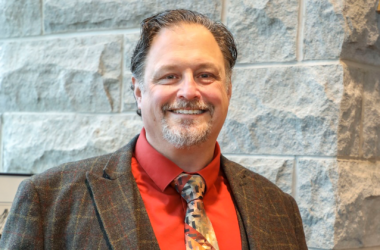
“Basically, I recruit actors who simulate doctors’ appointments for students to give them one-on-one experience with the bedside manner,” Standardized Patient Program Director Jason Lockart explained. “There is a brief bit of training, teaching the actors how to properly answer questions to give the students the right experience.”
The actors portray patients with routine medical conditions Concord’s PA and nursing students will encounter during the course of their careers. The future nurses conduct initial assessments and confer with the PA students, who learn the chief complaint that brought the “patient” to the “clinic,” but they otherwise enter the exam rooms blind to meet with their patients.
“The PA student comes in and asks the actor what’s bothering them. They talk about diet, exercise, and what’s bothering them that day,” Lockart said.
Michael Simmons, a Concord senior, is one of the actors working with the SP program this summer, and he said the chance to participate in real acting work and assist in helping other students train for their chosen career fields are both benefits of the project. Although the actual assignments are not terribly challenging, there are times when the questions the PA students ask can be tricky.
In instances when the small-talk portion of an exam catches him off-guard, Simmons said he rolls with impromptu conversation and relies on his improvisational acting skills.
If the scenario requires labs or testing, Lockart supplies predetermined results at the appropriate time to maintain the realistic setting. He estimated that each clinic visit runs approximately 45 minutes.
Concord’s Standardized Patient Program is currently in its second semester. At first, PA, nursing, and even some social work students saw individual patients one time and moved on. This semester, PA Studies Director Jennifer Pack said her students will take on a team approach, treating the same patients chronically, imagining a certain time period has lapsed between each appointment.
“They all take turns seeing the same patient …They all get to watch each other. As faculty, we all get to critique them. If we all notice that they are not showing as much empathy as they need, or they are not picking up on the patient’s cues, that they are holding back information, or whatever, then we are able to give them feedback,” Pack said.
At the end of each session, the student actors each get an evaluation form, so they get to weigh in on how the future healthcare providers made them feel as potential patients in the setting — on whether they did the routine things like washing their hands, if they greeted them when they entered the room, asked the right questions and followed the appropriate protocol, listened attentively, made them feel heard, etc.
“In a way, they are participating in the assessment process,” Lockart said.
Although the program was designed primarily to benefit the PA students, it has helped those from other programs, too, especially future nurses, who work hand in hand with PAs and doctors in real-world practices and hospitals.
“For our nursing students, standardized patients are incredibly valuable. They give students the opportunity to practice therapeutic communication, patient education, and assessment techniques with individuals who can offer immediate, meaningful feedback,” Michele Holt, director of Concord’s BSN program, said. “This experience helps students feel more prepared and less anxious as they transition into clinical settings, ultimately supporting patient safety and strengthening the quality of care they provide.”
From her perspective, Pack said the program is particularly valuable because it allows the healthcare students to learn from potential mistakes outside the presence of real patients, and it builds their confidence in a classroom setting. She expressed appreciation for CU’s willingness to invest in the program and thanks to Lockart for creating the grassroots initiative.
Alexa Mescaro, of Morgantown, is a PA student interested in pursuing a specialty in dermatology. She enjoys the collaborative nature and teamwork associated with the SP program, along with the fact that Concord instructors and research guides are always available if a case stumps the students.
“I just really try to tell myself that it’s everybody’s first time doing this … We always have guidance. If we’re really stressed and struggling, we always have our professors there nearby; they can prompt and help us to get the right answer. But, with collaboration, it really helps ease stress, because you know you’re not alone,” Mascaro said.
She added that “the guidance and hands-on learning” are her favorite elements of the program.
“We’re all in the same classes, but somebody might interpret something different,” Mascaro said. “Then, you’re just building on communication and connection with each other.”
She encouraged younger students to “always be yourself, and just listen to your patient. Look at them as a whole person and not just that one chief complaint.”
Persons with disabilities should contact Nancy Ellison, 1-304-384-6086 or 1-800-344-6679 ext. 6086, if special assistance is required for access to an event scheduled by the University on campus. Concord University may take pictures at these events for publicity purposes.