



By Ashley Perham, Charleston Gazette-Mail
CHARLESTON, W.Va. — A Kanawha County judge has ruled that West Virginia’s insurance company could owe up to $1 million per plaintiff in the lawsuits regarding a hidden camera in the locker room of the West Virginia State Police Academy in Institute.
The ruling, written by Kanawha County Circuit Judge Ken Ballard, also gave details about a bucket full of missing evidence in the case.
More than 80 women have filed lawsuits in the matter, in addition to a class-action lawsuit.
Previously, National Union Fire Insurance Co., which insures the state, argued that under the policy, the maximum total payout could be $1 million.
However, an attorney for the plaintiffs argued that each plaintiff who was videoed could receive up to $1 million, although each claim may not be worth that much.
Ballard ruled for the plaintiffs in this matter.
“The Court finds as a matter of law that the alleged secret videotaping and invasion of privacy of each individual Plaintiff would constitute a separate ‘occurrence’ and ‘offense’ or ‘event’ for purposes of the coverage limits under the subject National Union Policies,” Ballard wrote.
Case background
In his ruling, Ballard wrote the background of the case, starting with a July 2022 anonymous letter sent to the West Virginia Capitol Complex that alleged a deceased trooper, Joseph Portaro, had placed the camera.
Joseph Michael Comer, a former WVSP trooper, helped draft the letter, which said the camera was placed in 2018. However, Portaro died in 2016. Lawsuits have stated the camera was placed as early as January 2015.
According to the letter, Portaro placed the camera to catch Reginald Patterson, then chief of Staff Services, having an affair.
In March 2023, then-Gov. Jim Justice confirmed the placement of the camera and said that three troopers found a thumb drive with videos from the camera and destroyed the evidence.
“They found the video,” Justice said. “Then one, if not all, immediately jerked the thumb drive out and threw it on the floor and started stomping on it.”
One of the troopers, WVSP instructor Joshua Eldridge, has “allegedly claimed” he only watched the video until he identified the subject of the video as the lab director, Ballard wrote.
“However, he has also purportedly acknowledged that there was much more on the video and the video was not the only file on the hard drive which he received,” Ballard wrote.
In a deposition quoted by Ballard, Eldridge said he could see the sink area, the toilet stalls and the area leading to the shower.
Missing evidence
Eldridge has testified that his superior, Patterson, ordered the one thumb drive to be destroyed, Ballard wrote.
However, in a deposition in a related case, Ballard wrote, Eldridge testified there were as many as 50 thumb drives and SD cards that he and two other troopers cleaned out of Portaro’s room and placed in a white bucket. Eldridge testified he did not review the contents of the devices and didn’t know where the bucket was.
“To this day, nobody knows what occurred with these 50 or more thumb drives and SD cards,” Ballard wrote.
“Based upon this evidence, Plaintiffs assert that there were likely hundreds of individual videos on the 50 or more drives which contained video of many more individual Plaintiffs who were videotaped while using the locker rooms,” Ballard wrote. “However, all of this evidence was destroyed by the State Police.”
Ballard ruled that the parties in the case should go back to mediation before a Nov. 19 status hearing.
Cahill lawsuit
Jan Cahill, the former WVSP superintendent, resigned the day Justice confirmed the hidden camera.
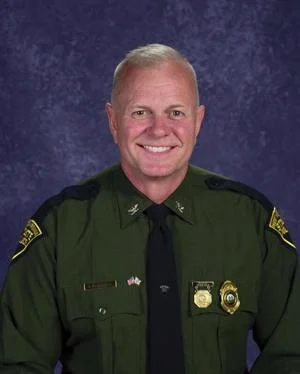
Cahill filed a lawsuit this spring against the state and the state Department of Homeland Security, alleging he was forced to resign for being a whistleblower on potential CARES Act fraud.
The lawsuit was dismissed last month by Kanawha County Circuit Judge Richard Lindsay as Cahill did not correctly send pre-suit notice to DHS.