
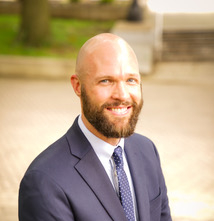

By Doug Cipoletti, Executive Director at West Virginia Virtual Academy
Each May, during Mental Health Awareness Month, schools across the country pause to highlight the growing mental health needs of students. But for many educators and families, this issue is far more than a once-a-year campaign—it’s a daily reality. At West Virginia Virtual Academy (WVVA), we know that students can’t learn effectively if their mental and emotional needs aren’t being met. That’s why supporting mental health isn’t an add-on in our school—it’s embedded in everything we do.
The statistics are sobering. According to the CDC’s 2023 Youth Risk Behavior Survey, more than 42% of high school students reported experiencing persistent feelings of sadness or hopelessness in the past year—a figure that has steadily increased over the last decade. Even more troubling, nearly 1 in 5 students said they had seriously considered attempting suicide [CDC, 2023†source].
These numbers don’t exist in a vacuum. Behind them are students who are overwhelmed, anxious, and often unsure where to turn for support. And as pressures mount— academically, socially, and emotionally—it becomes more important than ever for schools to provide safe spaces for students to talk about mental health, learn coping skills, and connect with trusted adults and peers.
At WVVA, a full-time, tuition-free public virtual school, we serve students across the state who often come to us looking for a different path. Many struggled with bullying or anxiety in traditional school settings. Others needed more flexibility due to health challenges or personal circumstances. What they all have in common is the need to feel seen, supported, and empowered to succeed—not just academically, but emotionally.
One recent classroom project perfectly captured that spirit. In a unit on stress and emotional wellness, WVVA health and physical education teacher Brooks Legg invited his high school students to create their own “Stress Toolkits.” Using Padlet, an interactive digital board, students shared the strategies they personally use to manage stress: grounding techniques, mindfulness apps, soothing playlists, breathing exercises, and more.
The wall quickly filled with deeply personal and creative posts—anonymously shared in some cases—showing not only the resilience of our students but their willingness to support one another.
“Everybody goes through stress,” Mr. Legg told his class. “But there are positive ways to deal with it, and sometimes you can help someone else just by sharing what works for you.”
That message resonated. Students didn’t just complete the assignment—they engaged with each other, reflected on their own mental health, and learned that they weren’t alone.
It’s a reminder that in a virtual environment, connection and community are alive and well—and powerful. While some are unsure how online schools support the emotional needs of growing students, we’ve found students may be more at ease interacting in an online environment. With smaller class sizes, daily live instruction, and personalized teacher support, students often feel safer opening up and more comfortable taking emotional risks. There’s something freeing about learning from home, surrounded by familiar comforts and without the social pressures that often accompany brick-and-mortar schooling.
But the responsibility to support students can’t fall on individual teachers or single classroom moments alone. It has to be built into the culture of the school. That’s why WVVA offers access to counselors, advisors, and resources from the Cook Center for Human Connection that prioritize the whole child—not just their grades. It’s why we create opportunities for peer connection, wellness programming, and student voice. And it’s why projects like Mr. Legg’s are not just encouraged but celebrated.
Mental health and academic success are deeply linked. The American Psychological Association has reported that high stress levels in high school students correlate with sleep disturbances, poor concentration, and declining grades [APA, 2019†source]. But with the right tools and support systems, students can build resilience and thrive—even during life’s most challenging seasons.
As we observe Mental Health Awareness Month, let’s move beyond feel-good posters and hashtags. Let’s listen to students. Let’s equip teachers. Let’s innovate around how we deliver not just education, but care. And let’s recognize that schools—virtual or not—are on the front lines of a mental health crisis we can’t afford to ignore.
The students in Mr. Legg’s class reminded us of something essential: Everyone is carrying something, but none of us has to carry it alone.
Let’s make sure every student in West Virginia—and beyond—feels that truth in their school every day.
Sources:
• CDC Youth Risk Behavior Survey (2023):
https://www.cdc.gov/healthyyouth/data/yrbs/index.htm
• American Psychological Association (APA) Survey on Stress in America – Youth (2019):
https://www.apa.org/news/press/releases/stress/2019/stress-america 2019.pdf