
By Autumn Shelton, WV Press Association
CHARLESTON, W.Va. – Two years ago, Charleston resident Steve Laster needed a kidney.
He had been diagnosed with stage three chronic kidney disease in 2014, and by 2021 his disease had progressed to the point that his doctor recommended he get started with dialysis. To make matters worse, Laster had been born with only one kidney.
Fortunately, through a life-giving organ donation, Laster was able to receive a kidney, and is now an advocate for organ donation through the Center for Organ Recovery & Education (CORE).
In a recent interview, Laster, as well as CORE Donor Family Support Coordinator Jeremy Zeiders, discussed organ donation in order to increase awareness of the life-saving process.
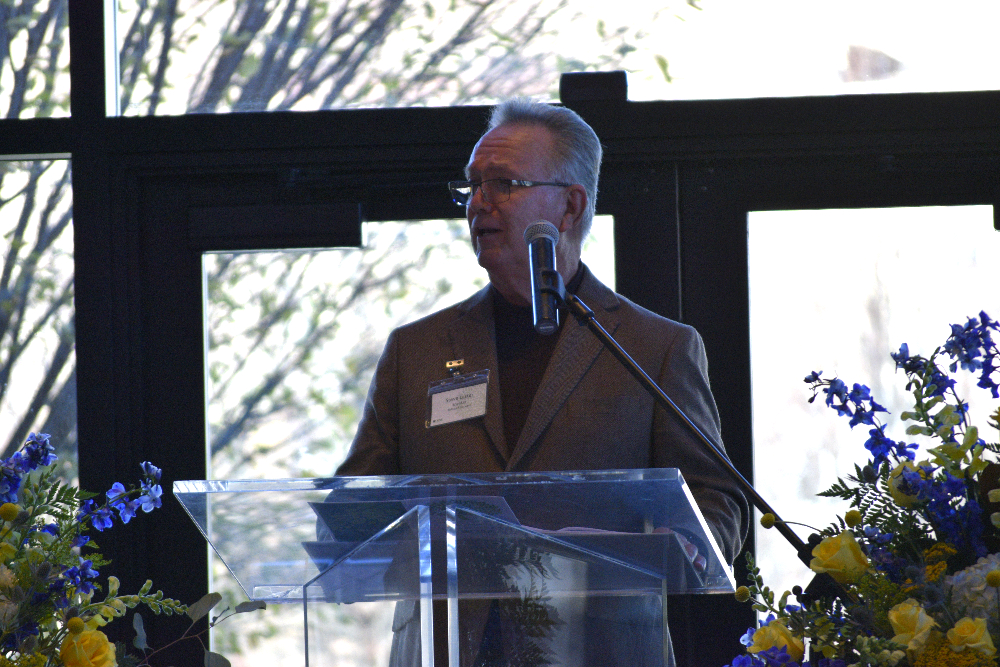
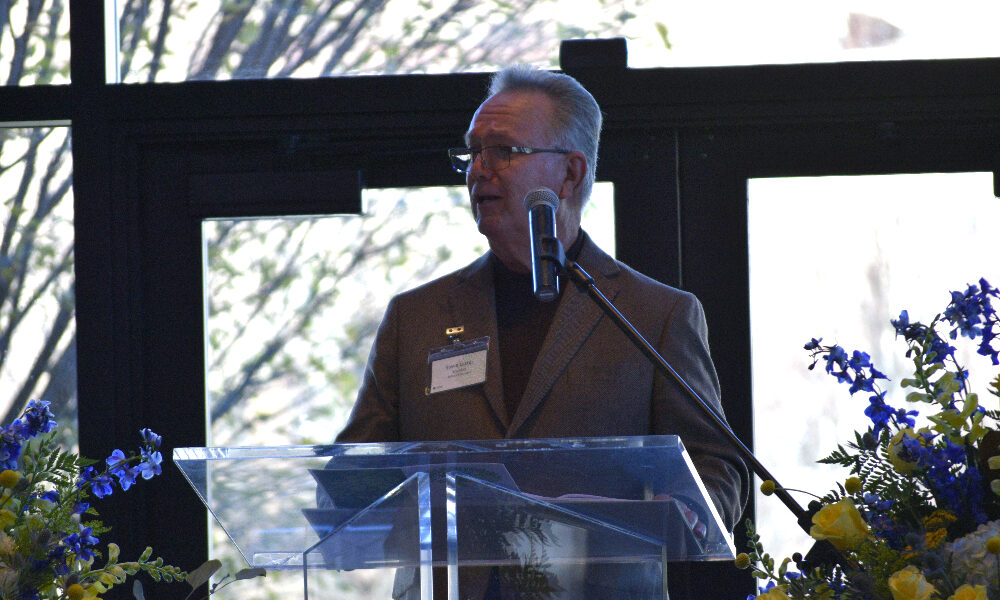
CORE event. Photo provided by CORE.
According to Laster, he was born in Burlington, NC, in 1958, and spent most of his life in the Tar Heel state before coming to West Virginia in 1999 to finish construction on the South Charleston Marquee Cinema for Edifice, his brother’s construction company. While working on the project, Laster said he decided to go to a comedy zone one night, where he met the love of his life, Brenda.
“She worked for Verizon at the time, and was out with a group of coworkers,” Laster recalled. He said it took him a while to “get up the nerve” to talk to her that night, but he is glad he did. The two have now been together for 24 years. He said he couldn’t have done any of this without her.
In 2014, Laster said he started having kidney problems.
“I was in Clarksburg, working on a job, when I passed a kidney stone,” Laster said. “From there, I found myself at a nephrologist, Dr. Julian Espiritu at Renal Consultants, who informed me I was in stage three chronic kidney disease. So, that was the start of management of the sole kidney that I have, which I still have today.”
“I was called in to do labs regularly and had to take supplements and vitamins,” Laster continued. “Seven years later, in 2021, I found myself going to a Kidney Smart class, where they explained getting a fistula placed for at-home dialysis. My Glomerular filtration rate, being what you are filtering out of your body–the toxins and so forth, had fallen to 13. Sixty is generally the high limit, but mine was 13. So, the doctor said, ‘It’s time to see the surgeon,’ to have a fistula put in my arm.”
That same year, in December 2021, Laster made the decision to go to Charleston Area Medical Center (CAMC) Kidney Transplant Clinic, where he met the criteria to be placed on an organ donation waiting list.
On Jan. 18, 2022, Laster made the trip to the CAMC Vascular Center to complete vein mapping for placement of his fistula, but later that night he received the call that changed his life.
“That night, at ten minutes after 9, the transplant nurse, Travis, called me and said, ‘Mr. Laster, would you be interested in a kidney?’ Of course, my jaw dropped, but my first reply was, ‘If there is a young person in need of a kidney, by all means let this young person have it.’ Travis informed me that, no, this was matched up to me. It was my kidney.”
Laster said he hung up the phone, and looked at Brenda in amazement.
“Ten minutes later the phone rang,” Laster said. “It was Travis asking me to come to the hospital. So, I put the phone back down, looked at Brenda and said, ‘Let’s go to the hospital.’ We both broke down and cried. About 45 seconds later, I came to my senses and said, ‘Honey, we need to save this cry for later. We’ve got some very important things to take care of at the moment.’”
Laster had his transplant surgery at 9 a.m. the following morning.
“I came to at about 1:30 in the afternoon,” Laster continued. “My surgeon, Dr. Nagaraju, came in and explained everything went well, and that he expected a very good outcome. So, great news right off the bat. At 4:30 that afternoon, I was walking down the hall cutting-up, laughing and being myself.”
By Saturday, Laster was home.
“Now I love to garden, I have a beautiful garden with dahlias, roses and various plants, and I am a home chef,” Laster said. “My immune system is pretty much in the tank and I have to take anti-rejection medication for the rest of my life, but it’s a small price to pay for such a wonderful gift.”
While out in the community, Laster said he tries to be a bright light for those who need it, and he helps people register to become organ, tissue and eye donors.
“I enjoy going out and asking someone if they are registered to donate,” Laster said, adding that he enjoys the opportunity to educate people on organ donation and clearing up any misconceptions they may have.
“Some people say, ‘I haven’t made up my mind,’ or ‘These are mine, I was born with them and I am taking them with me,’ and some people think if you are sick and go to the ER that the doctor will let you die so they can use your organs, but that is a misconception from the very start,” Laster said. “I tell them the doctor is there to save your life. They have protocols. They only learn a person is an organ donor if they are close to passing. . . . I try to set that to rest with people.”
“I think organ, tissue and eye donation is very important,” Laster concluded. “It is the last opportunity for charity that you will ever have. What in the world will we ever do with the rest of ourselves when the time comes? Let’s give it to someone who needs it. . . . Giving equals receiving. Reach out and reach in.”
According to statistics provided by CORE, 115,000 people nationwide are on the organ transplant waiting list.
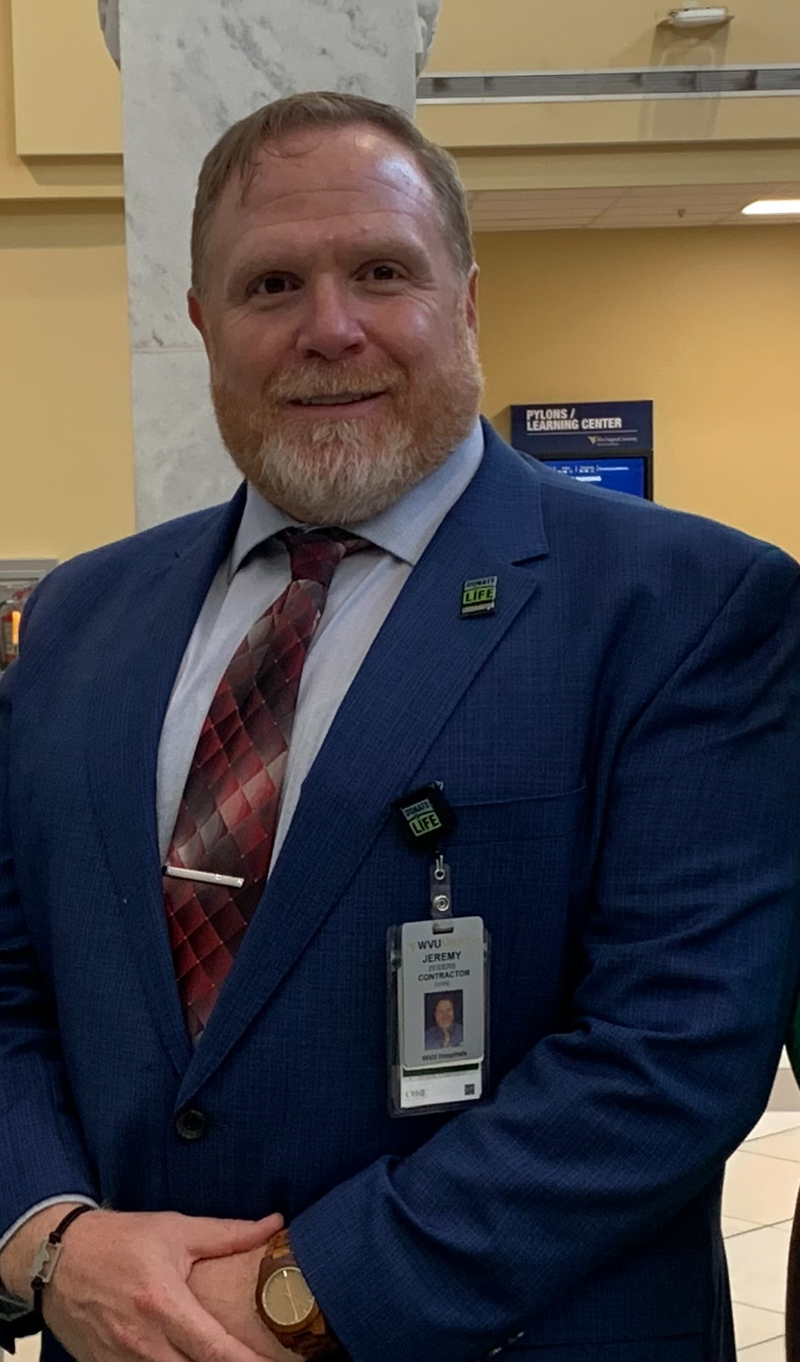
family support coordinator
at CORE.
“To put that into perspective, that’s two WVU Mountaineer football fields of people who are waiting on a transplant,” Jeremy Zeiders explained, adding that in West Virginia there are currently 500 people waiting for a life-saving transplant.
In the 1980s, the federal Centers for Medicare and Medicaid Services (CMS) played a key role in allowing organ procurement organizations, like CORE, to be created, Zeiders continued.
“There are 56 of us throughout the United States, and CORE serves those living in western Pennsylvania and West Virginia,” Zeiders said.
Today, CORE employs about 175 employees, with about 20 employees living and working throughout West Virginia.
“As an organ procurement organization, our mission is to save and heal lives through donation,” he said. “Organ donation really does save and heal lives. There is a misconception out there that if you are in an accident, and are registered to be an organ donor, that we are not going to save your life. But that’s simply not true. Only when death is imminent does organ donation become a possibility.”
“One healthy organ donor can save up to eight lives because there are so many different organs you can use – the heart, lungs, liver, pancreas, intestine and kidneys,” Zeiders continued. “There are 75 different ways that you can help someone through tissue donation.”
At this time, in the Mountain State, the Medical Eye Bank of West Virginia is able to help give the gift of sight, while two centers are able to provide organ transplants, according to Zeiders.
“One is in Morgantown at WVU Medicine’s J.W. Ruby Memorial Hospital, which in 2019 reopened their kidney program as well as heart transplant program, and the other is the CAMC Kidney Transplant Center in Charleston,” Zeiders said.
“Statistically folks are more likely to need an organ transplant than they ever are to have the opportunity to donate one, because it’s so specialized–you have to be at the end of life on the ventilator to fit the criteria,” Zeiders continued. “We see families in tragedy that are praying for something positive to occur with their loved one, and there’s somebody on the other side praying that there is a donation that can save their loved ones life. It’s always a tragedy when it comes to organ donation, but there is a silver lining. It doesn’t all have to be a negative occasion. There is healing that comes from both the donor family and the recipient through the organ donation process.”
Zeiders added that it is important for family members to talk to one another about organ donation, in the event a tragedy should occur.
“We run into families all the time who have never had that conversation about what that loved one would want,” Zeiders said. “It’s important to have those conversations with your loved ones–to know the path they want to take for their end of life journey.”
To become an organ donor, West Virginians may register when they renew their driver’s license at the DMV, while obtaining a hunting or fishing license, or online at https://registerme.org/.
“Steve’s story wouldn’t be possible if not for the generosity of an organ donor,” Zeiders said. “Organ donation is about paying it forward. You are helping humanity really. You give up something to save someone else.”
“The fact is, when you pass away, you can’t take it with you, and that isn’t doing anybody any good,” he concluded. “There is an opportunity there to give to somebody else. Organ donation really is a final act of love. . . . These are regular people. They are our neighbors who could be on the transplant list, or they may be organ donors. There is no greater gift than giving somebody life, and that’s what we are doing here.”
For more information about CORE, visit https://www.core.org/.