

By Riley McCoy
For The Register-Herald
Mt. Hope — Opponents of a proposed RV park at Bailey Bottom pressed city officials for answers at Tuesday’s city council meeting.
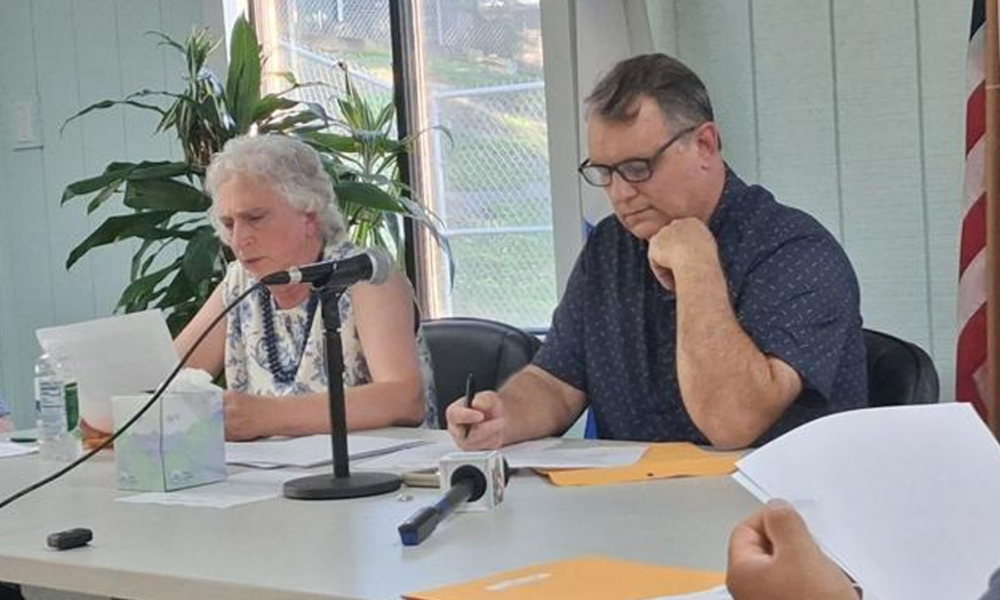
Council member Patricia Conelly offered a motion to relocate the proposed campground from Bailey Bottom after the city received a letter warning that the development would likely violate perpetual restrictions placed on the flood-buyout property.
According to Conelly, the guidelines for those restrictions have “been in effect since the Dunloop Creek project ended in 2014.”
Together, councilmembers Conelly and Steve Brown voted to relocate the project while councilmembers Richard Smith, Patty Logan and Tyrone Powell voted against the motion.
With the rejection of Conelly’s motion Bailey Bottom remains as the proposed location based on the proposal originally floated by Mayor Michael Kessinger. During the meeting, Kessinger said the city needs another month to consult federal agencies, engineers and grant administrators before deciding whether the RV park could proceed or whether the money could support another project.
“Right now there may not even be an RV park,” Kessinger said later at the meeting.
The city received a July 7 letter from the U.S. Department of Agriculture’s Natural Resources Conservation Service that spelled 11 activities that are prohibited in the federal floodplain easements, land that may overlap the proposed campground. Item No. 7 states, “Building or placing buildings or structures in the easement area” is prohibited. The statement also says the installation of an RV park at Bailey Bottom “would also likely violate many of the above-listed restrictions and therefore would not be allowed.”
Mt. Hope owns 66 Emergency Watershed Protection Program Floodplain Easements. The easements were conveyed to the federal government in perpetuity and restrict development that could interfere with the restoration and protection of the floodplain.
The letter said an RV park would be considered “developed recreation” and would likely violate several restrictions under the federal program.
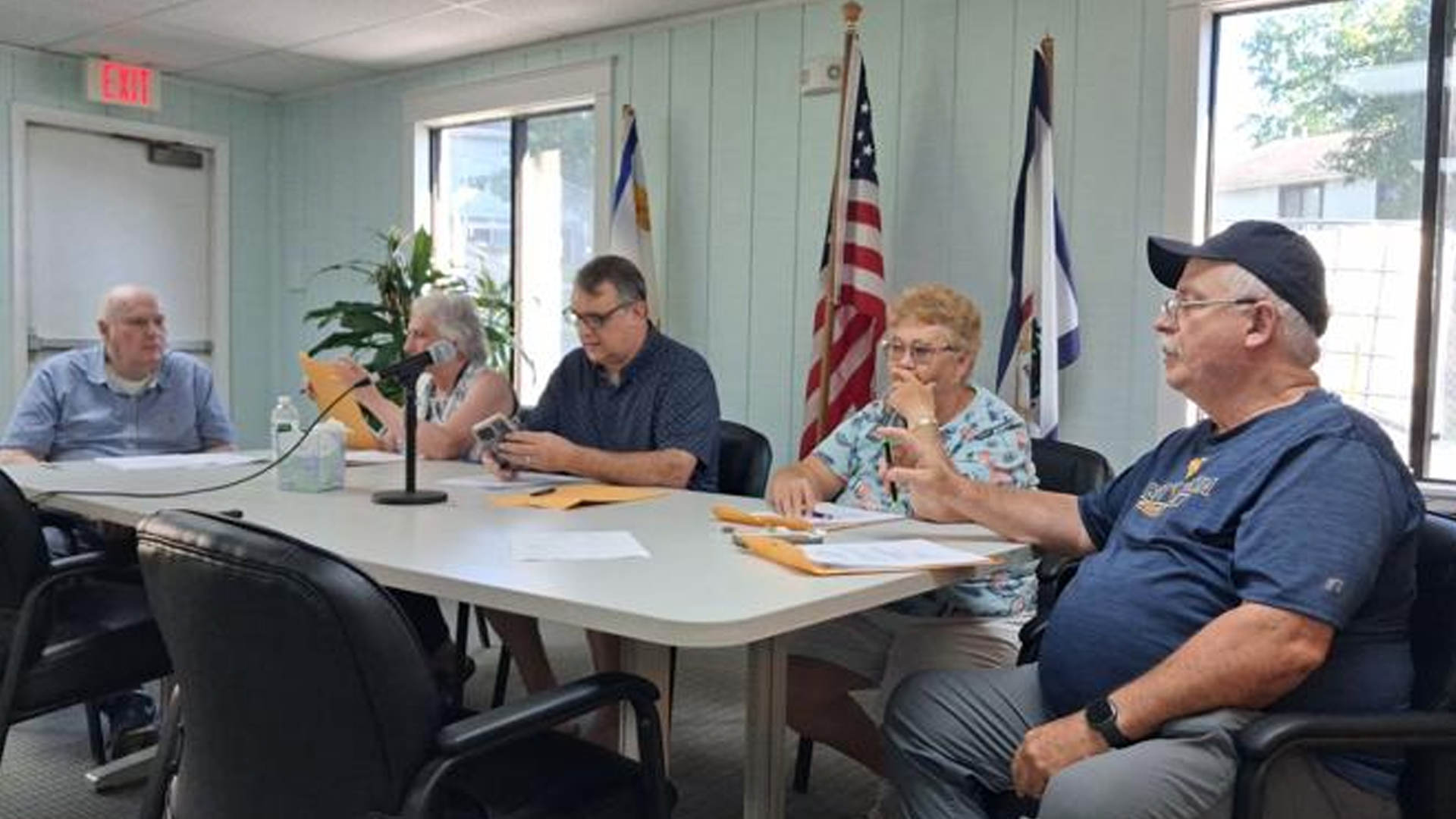
Before making her motion, Conelly asked that the USDA letter be entered into the council’s minutes and read a prepared statement that sharply criticizes the project’s development.
“I do not understand why NRCS was not contacted early in this process,” Conelly said. “To determine what was permissible and not permissible on the deed-restricted lands.”
Conelly explained that previous warnings led her to repeatedly ask whether Mt. Hope had obtained NRCS authorization for the campground.
“I kept asking all along if we had gotten permission from NRCS to be able to put an RV park down there, and evidently not,” she said.
She called for a formal, independent investigation into the development of the RV park and related projects to determine whether there was “a deliberate misleading effort in order to obtain federal grants” or whether the city reached its current position through “sheer incompetence.”
“It is my sincere hope that irreparable harm has not been done to the city of Mt. Hope and our potential for future government grants, and that we do not face municipal liability,” Conelly said. “It seems it’s easier to ask for forgiveness than permission.”
She requested a full accounting of pending expenses, particularly money owed to E.L. Robinson Engineering and said council had not been included in the meetings and conversations that shaped the project.
Kessinger denied that city officials had intentionally violated federal requirements.
“We’ve not done anything wrong as far as anybody goes or any of these federal agencies are concerned,” Kessinger said. “We’ve been granted the money from the federal government and from the state of West Virginia on these projects.”
He said the USDA correspondence revealed an issue involving language connected to the property deed that city officials had not previously understood.
“Yes, it’s shined new light on the subject,” Kessinger said.
Kessinger asked council not to make an immediate decision while the city continued discussions with USDA, NRCS, the U.S. Department of Housing and Urban Development, engineers and the project’s funding sources.
“I think any decision we make at this point would be a premature decision,” Kessinger said.
Smith also argued that the city needs more time. He said the letter had arrived only days before the meeting and that City Hall had received a hard copy that day.
“Even if it’s going to be reversed,” Smith said. “It takes time to do that sort of thing.”
After the motion failed, residents continued questioning the city’s handling of the project.
A resident who identified himself as Dee Helton thanked Conelly for recognizing public concerns but said the city had failed to provide clear, accessible information.
“There’s a lack of transparency, and a lot of people have a lot of questions, and we keep going around the revolving door of not answering the questions,” Helton said.
He asked the city to publish project documents, alternative locations and regular updates online rather than requiring residents to repeatedly call or visit City Hall.
Kessinger said a Kilsyth property was outside city limits and property at the north end of Mt. Hope lacked enough land. Bailey Bottom, he said, was the workable location available when the project moved forward.
Mike Tessman, a vocal critic of the Bailey Bottom site, challenged the economic premise behind the campground.
Tessman said he contacted seven RV parks within approximately 15 to 20 miles of Mt. Hope on the day of the meeting. None were at capacity, he said, and each could accept at least six more recreational vehicles.
“And the jamboree starts this weekend,” Tessman said. “So, I don’t see us really getting any money from [an] RV park.”
Tessman then tested public sentiment inside the council chamber.
“Is there anyone here for the RV park?” he asked. “Can you raise your hand if you would like to have the RV park?”
Nearly every hand remained down.
James Meadows raised his and elaborated on why it was raised.
He said he owns property on Delaware Street, grew up there and operates a campground along the Greenbrier River in Greenbrier County.
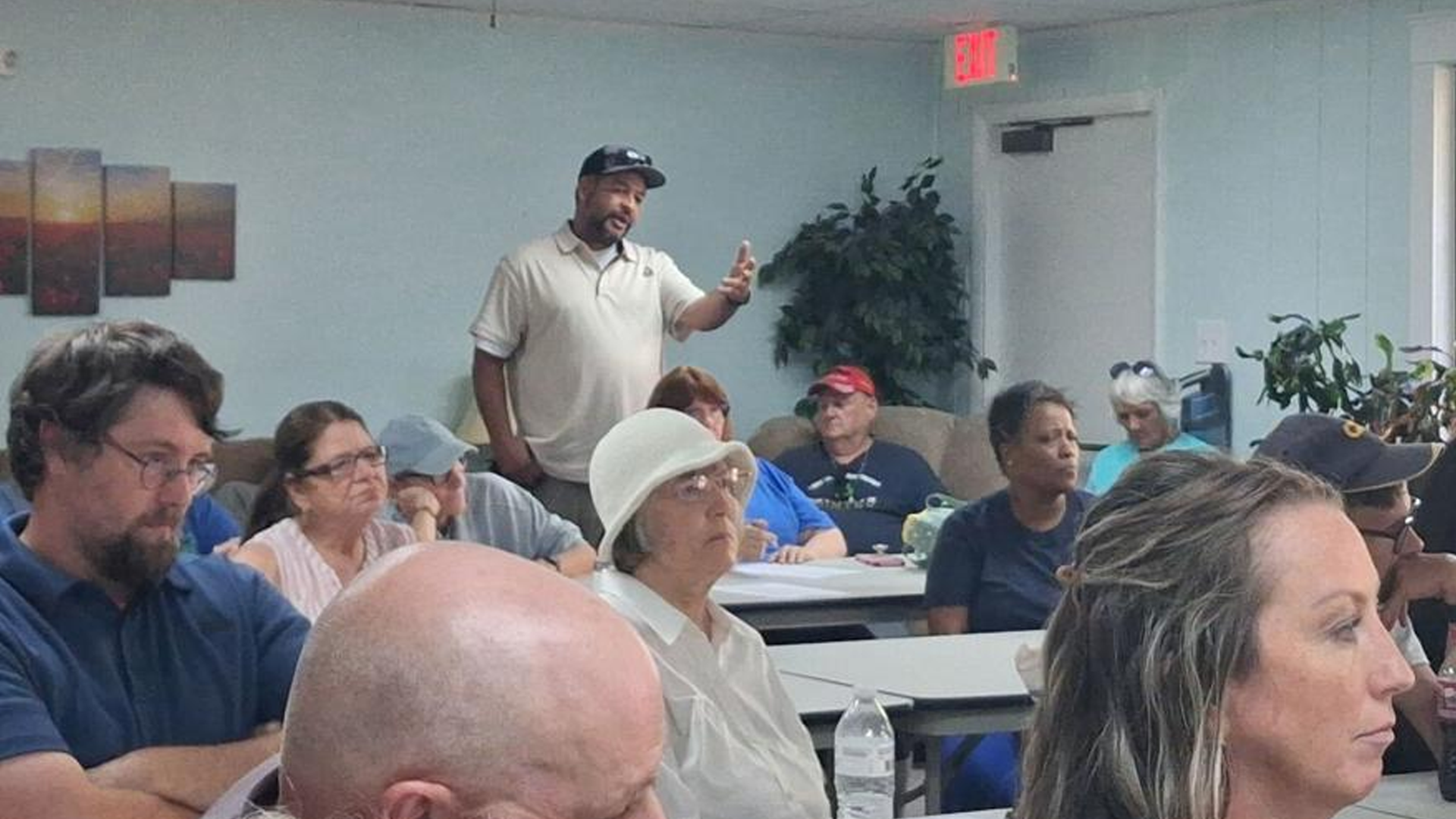
“Camping people were not horrible people,” Meadows said. “I raised my kids in the campground, and I love it.”
Meadows said he believed campers were being unfairly demonized. Tessman responded by asking whether Meadows’ campground was situated beside permanent homes occupied by families for generations, returning the discussion to residents’ argument that their concern centers on the proposed location rather than RV owners themselves.
Other residents questioned flood safety, utility construction and promises they said were made when the damaged properties were purchased through the flood-buyout process in 2014.
Kessinger acknowledged that the USDA letter had sharply reduced the project’s prospects.
“At this point, I don’t know,” Kessinger said. “I mean, it doesn’t look good.”
He said Mt. Hope had applied for and received funding to develop an RV park in the buyout area, but the federal easement language had created a “major issue.”
“We need to take a breath, step back, figure out what we can do and move forward with that as a city,” Kessinger said.
Residents suggested redirecting the money toward sidewalks, streets, youth recreation, a community center, the city stadium or stream restoration at Sugar Creek.
Kessinger said preserving the funding had become the city’s immediate priority.
“Where we’re at right now is trying to preserve the funds to see where we can spend the funds, whether it be at the stadium, whether it be at Sugar Creek with the stream restoration, whatever we can do to try to preserve these funds and to reallocate those things,” Kessinger said.
“The whole idea of the RV park is really questionable in general,” Kessinger said.
Asked after the meeting how the project could possibly proceed at Bailey Bottom when USDA had said developed recreation would likely violate the easements, Kessinger did not identify a legal path forward.
“That’s the question,” Kessinger said. “That’s the question we’re working through right now, and what our options are.”
Conelly said recreation money would be better directed toward repairs at the city’s football stadium before Mt. Hope pursued additional attractions.
“There’s no point in trying to put in an amphitheater if the stadium itself, the walls are crumbling, if the bleachers are in disrepair,” Conelly said. “The money to me needs to be directed toward repairs at the football stadium.”
Kessinger asked residents to give the city 30 days to determine what federal agencies would allow and whether the project funding could be preserved.
The RV park has not been formally canceled, relocated or approved for construction. It is unclear what penalties or fines may be imposed if the project is completed.
Read more from The Register-Herald, here.