



By Mike Tony
For HDMedia
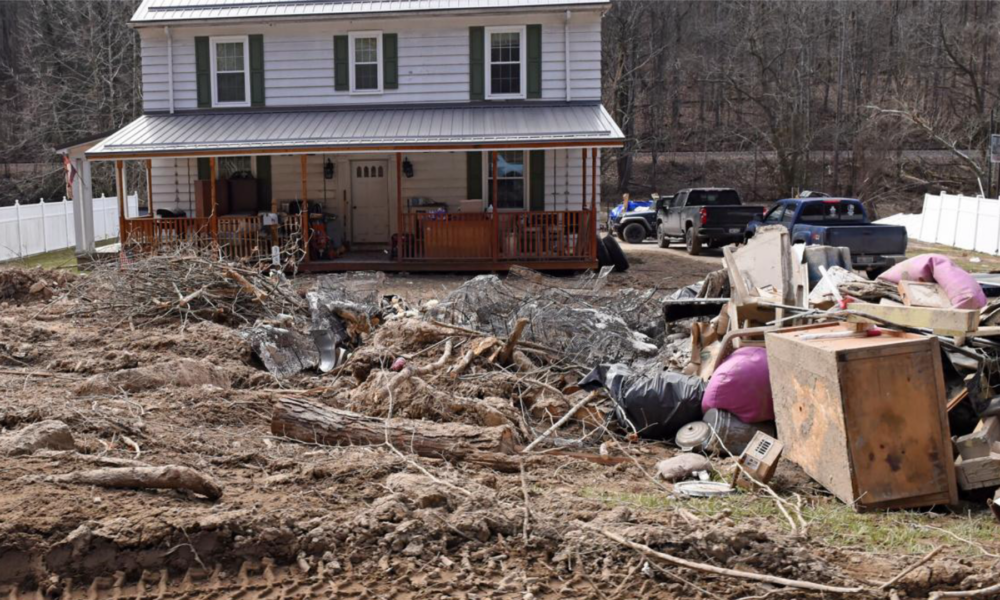
Tuesday marks 10 years since floodwaters devastated West Virginia, leaving 23 dead and displacing more than 2,000 people.
A decade later, new reports present mounting evidence that West Virginia is more vulnerable to similar devastation due to sweeping Trump administration resource cuts to the federal agency whose mission is to reduce the loss of life and property and protect the nation from natural disasters.
A report released by ReImagine Appalachia, a nonpartisan coalition of regional community and environmental groups, concluded that Trump administration changes in 2025 eroded the Federal Emergency Management Agency’s ability to help flood-prone West Virginia and neighboring states.
The report released last month found delayed disaster responses, increased politicization of disaster funds, a destabilization of FEMA’s internal structure and lengthy legal battles revealed “heightened community vulnerability” in a central Appalachian region already susceptible to flood emergencies due to climate change intensifying the frequency and severity of catastrophic deluges.
That report drew from official FEMA documents, research and news reports, and public government spending data.
“FEMA’s changes and their impacts in 2025 ultimately harmed Appalachian communities, a region experiencing more frequent and more intense floods,” the report determined. “Appalachian communities cannot afford further instability.”
A report released this month by Center for American Progress, a Washington, D.C.-based progressive think tank, found that Trump administration cuts to FEMA and other agencies meant to limit the havoc wreaked by natural disasters, including the National Weather Service, “have left families fending for themselves and rid American communities of a fighting chance against these fossil-fueled climate disasters and the health, economic, and environmental harms they bring.”
Since the June 2016 flooding that washed through West Virginia, those harms have piled up.
West Virginia experienced 1,052 flood events causing seven deaths and $14.9 million in property damage as well as 913 flash flood events causing 12 deaths and over $57.7 million in property damage from the June 2016 flood through February 2026, according to a Gazette-Mail analysis of available National Centers for Environmental Information data.
Flash floods are the most dangerous type of floods, occurring when rainfall is too heavy for the ground to absorb or when water fills usually dry creeks or streams, triggering quick water level elevation, sometimes in just minutes.
More than half of West Virginia’s critical infrastructure — including fire, police and power stations — was at risk of becoming inoperable due to flooding, according to a 2021 First Street Foundation study.
West Virginia’s share of critical infrastructure at risk of being inoperable due to flooding was higher than any other state.
Amid that risk, President Donald Trump’s nominee to take over a FEMA roiled by leadership changes throughout his administration, Cameron Hamilton, signaled a further shift of disaster response and recovery responsibilities to states at his nomination hearing before the Senate Homeland Security and Governmental Affairs Committee last week.
“I think many states and local officials have had incentives to drive up costs [to be covered by the FEMA],” Hamilton, still a pending nominee but expected to be confirmed, told the committee, saying the agency needs to “strike a new balance to encourage cost reasonableness and cost savings.”
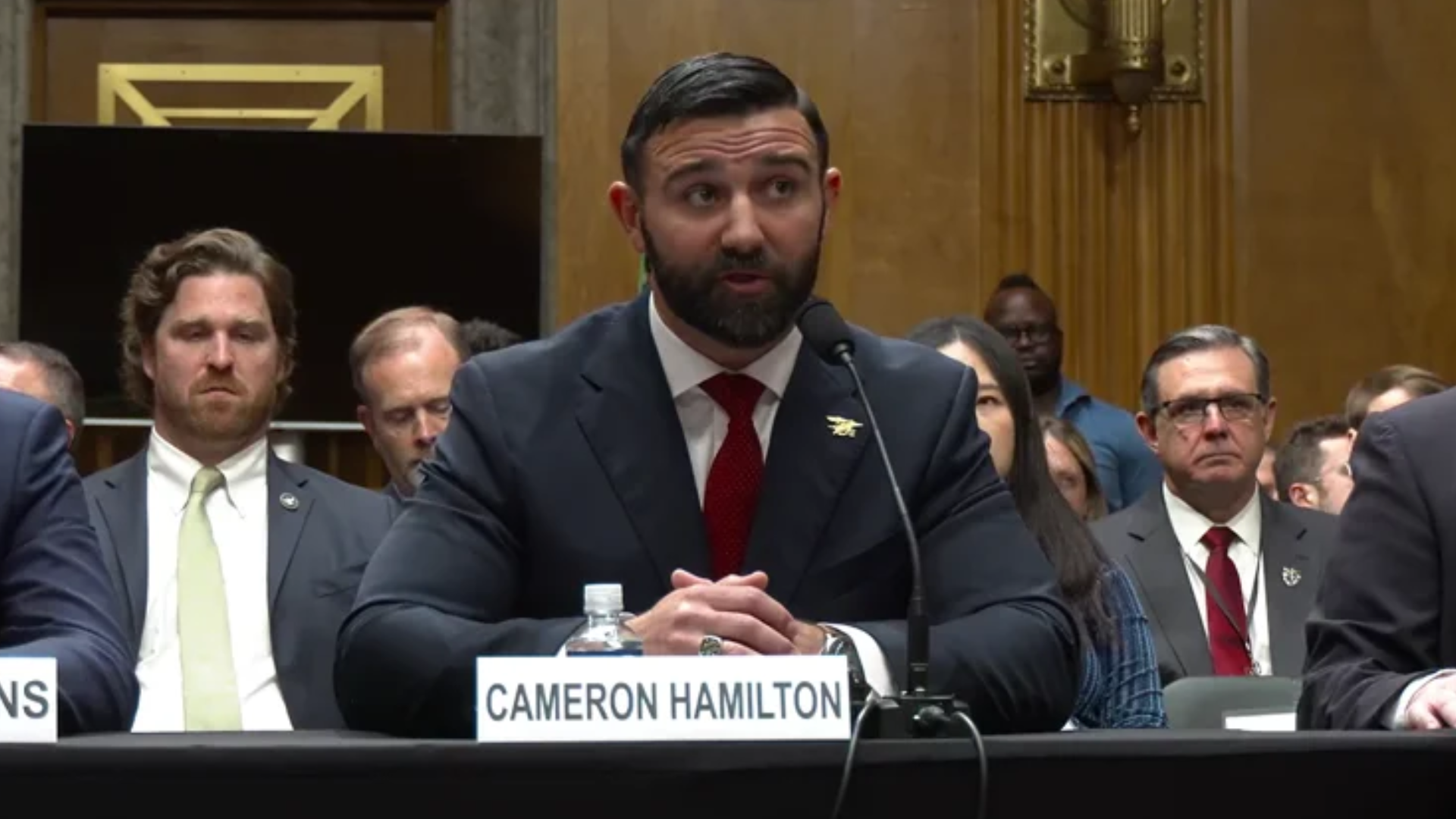
The Appalachian Flood Resilience Coalition, a recently formed group of largely regional nonprofits, led by ReImagine Appalachia and the Appalachian Citizens’ Law Center, a nonprofit law firm that focuses on mine safety and environmental protection, had said in a news release prior to Hamilton‘s hearing it wanted to learn what he predicts FEMA’s role would be under him in supporting the buildup of state, local and tribal government capacity to respond to and recover from disasters.
The coalition noted that a Trump-ordered FEMA Review Council report providing a full agency assessment released last month recommended that “internal workforce adjustments should be conducted over a 2-3 year phased approach that allows the agency to realize the efficiencies while reducing staff.“
The FEMA Review Council report suggested proposed increasing cost thresholds used to evaluate the need for assistance for rebuilding public and nonprofit facilities to account for inflation.
That report also noted the agency was managing more than 300,000 projects, namely subgrants, on over 600 open and active disasters, with roughly 25,000 open projects that had exceeded their regulatory or administrative timelines, representing more than $54.8 billion in unliquidated obligations.
Evidence suggesting Trump ‘punish[ing]’ blue states
ReImagine Appalachia’s study highlights a March 2026 Politico report offering evidence suggesting that Trump’s disaster declarations have been delayed or denied due to state-level political leadership.
The report found Trump had rejected disaster aid for Democratic-run states at the highest rate in FEMA’s 47-year history, approving only 23% of disaster funding requests from states with a Democratic governor and two Democratic senators since returning to office in January 2025 while approving 89% of requests from states with a Republican governor and two Republican senators.
“Given this stark data, what other conclusions can one draw other than the president is using federal disaster assistance to punish states that elect Democrats?” Sen. Gary Peters, the Homeland Security and Governmental Affairs Committee’s top-ranking Democrat, asked Hamilton during the panel’s hearing Wednesday referencing the Politico report.
“If confirmed, my focus will be to ensure that FEMA is objective, is fair and reasonable, follows the law and is consistent in the approach to how we adjudicate claims and requests for disasters,” Hamilton told Peters.
“[Y]ou still can’t answer questions about what happened while you were there,” Peters replied, alluding to Hamilton being FEMA’s acting administrator for part of 2025. “I don’t trust that that’s what you’re going to do because it didn’t seem like you did it when you were there before.”
Hamilton’s nomination comes after Trump dismissed him as acting FEMA administrator last year the day after he testified to Congress that the agency shouldn’t be eliminated as previously proposed by Trump, whose administration has since backed off that stance.
‘We had to put more staffing in there’
But FEMA’s responsiveness under Trump has been an issue in Republican-led West Virginia as well.
A July 2025 Gazette-Mail investigation of years of FEMA records showed the agency’s rate of declaration approvals slowed significantly and its backlog of declaration requests from states and federally recognized tribes had doubled since Trump took office on Jan. 20, 2025.
FEMA had slowed down in declaration approval frequency even compared with 2017, the first year of Trump’s first term, when the agency approved 31 declaration requests through July 13 — 24% more than it had at that point in 2025.
FEMA denied a West Virginia request submitted June 20, 2025, for Public Assistance via an Emergency Declaration on July 22, according to a FEMA Daily Operations Briefing. FEMA approved a West Virginia Major Disaster Declaration for Individual Assistance for Marion and Ohio counties the same day, according to FEMA records — 33 days after the Morrisey administration submitted its request.
Individual Assistance is a FEMA program that provides funds directly to eligible individuals and families. Public Assistance is a FEMA program that supports state and local governments and certain local nonprofits.
The Governor’s Office has said West Virginia subsequently waited on a federal decision on a request the state submitted for Public Assistance on July 23 as an add-on to its request for a Major Disaster Declaration after a joint review between state and federal partners.
On Sept. 11, 90 days after the June flooding hit northern West Virginia, Morrisey’s office announced Public Assistance had been approved for Marion and Ohio counties.
West Virginia Department of Homeland Security Acting Secretary Doug Buffington told the Joint Legislative Flooding Committee in October that FEMA set up buildings and security on the ground in response to a February 2025 flood in southern West Virginia but didn’t do so following the June 2025 flood that hit Marion and Ohio counties, resulting in a greater operational burden on state officials.
“So from flood one to flood two, we had to find the building to house FEMA, to house local officials to get information out,” Buffington told the committee. “We had to provide security. We had to put more staffing in there from the state.”
Court finds ‘unlawful Executive encroachment’ under Trump
ReImagine Appalachia noted in its report that FEMA grant obligations in West Virginia, Kentucky, Ohio and Pennsylvania plummeted from nearly $1.2 billion in 2024 to roughly $600 million in 2025.
The group also highlighted an October 2025 analysis by Pew Charitable Trusts, a nonpartisan, global public policy research organization, that found that the highest year of federal aid West Virginia received in a study period spanning 2003 to 2025 would have cost 24.2% of the state’s reserves without federal support.
The analysis drew from state-by-state data from the Carnegie Endowment for International Peace, a globally focused policy group in Washington, on a subset of federal disaster grants and from the National Association of State Budget Officers on state resources and spending,
ReImagine Appalachia’s report flags the Trump administration’s obstruction of support for the Building Resilient Infrastructure and Communities program that makes federal funds available to states and local governments for hazard mitigation activities, including hardening utilities and relocating critical facilities out of flood areas.
ReImagine Appalachia observed that a Trump administration move to block hundreds of millions of dollars in funding for the program nationwide “further jeopardized disaster resiliency efforts, leaving small communities more vulnerable to natural disasters at a time when they needed support most,” noting that affected flooding and dam or levee break projects throughout the region were those chiefly affected, accounting for over 88% of all obligated funds and totaling more than $74.2 million.
The program known as BRIC has been revived after a December 2025 Massachusetts federal court order blocked its cancellation, finding the case to be “about unlawful Executive encroachment on the prerogative of Congress to appropriate funds for a specific and compelling purpose[.]”
FEMA has published its Fiscal Years 2024-25 funding opportunity for BRIC, for which the submission deadline is July 23. But ReImagine Appalachia’s report states that communities have been left “in confusion and uncertainty” throughout the legal process allowing what were later found to be unlawful policies to stay in effect for long periods.
Federal watchdog agency warns FEMA stretched too thin
The FEMA personnel pool shrunk fell last year under the Trump administration’s initiative to slash the federal government workforce, falling 9.5% to 23,350 in a five-month period ending June 1, 2025, according to a September report from the U.S. Government Accountability Office, a federal watchdog agency that works for Congress.
The Center for American Progress report notes that office’s finding that the agency had 710 open major disaster and emergency declarations still receiving some kind of federal support to begin last year’s hurricane season on June 1, 91 with support in the field — an increase from 495 open major disaster and emergency declarations in July 2022.
“When new disasters hit and these staff are redeployed to respond to them, it diverts resources and potentially delays efforts on open disasters,” the office warned.
FEMA claims it’s becoming ‘leaner’ and ‘faster’
FEMA did not respond to a request for comment on the ReImagine Appalachia report. In response to the Center for American Progress report, a FEMA spokesperson said that FEMA and its parent agency, the Department of Homeland Security, are “ready for the 2026 hurricane season.”
“We’re ensuring workforce stability and a strong, deployable force for upcoming national events and potential disasters; making the agency leaner, faster and laser-focused on supporting state, local, tribal and territorial partners before, during and after disasters,” the spokesperson said in an email. “FEMA continues to maintain a roster of experienced leadership and support staff across headquarters and regional offices, including through acting and career personnel serving in key roles to ensure continuity of operations and mission readiness.”
Programs ReImagine Appalachia underlined as priorities for continued funding included BRIC, a FEMA flood hazard mapping and risk analysis program and emergency watershed and agricultural land conservation stewardship incentive programs, with the group noting that healthy soils act as a sponge to retain more water in drought scenarios and take in more water in flooding situations.
“To build a truly flood-resilient region,” ReImagine Appalachia’s report concludes, “we must return to a model of robust, stable, and transparent federal investment.”
Read more from HDMedia, here.