


By Jason Pizatella
For The Herald-Dispatch
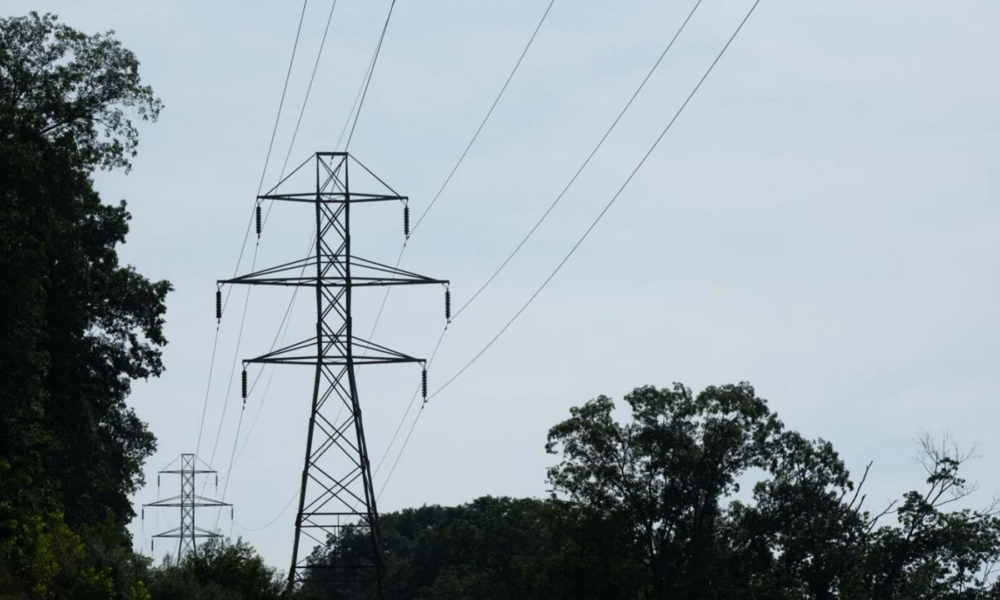
If West Virginia wants to grow paychecks, keep skilled workers, and compete for the next generation of industrial investment, we must start with one foundational truth: No major employer will locate or expand where the power supply is uncertain.
Bottom line: Reliable electric transmission is not just a utility issue; it is a jobs strategy. Initiatives like Gov. Patrick Morrisey’s 50 gigawatts by 2050 plan have the potential to be a game-changer for our state.
Projects like the Mid-Atlantic Resiliency Link (MARL)demonstrate the scale of future impact. Project filings show 400–600 construction jobs during the build window, including 200–300 West Virginia workers, and $36.7 million in wages flowing directly to local communities.
That is only one transmission line.
Transmission construction is labor-intensive and subcontractor-heavy. It requires site preparation, concrete, steel assembly, trucking, fencing, welding, electrical work, security, and final environmental remediation and restoration.
These are not off-the-wall possibilities. They are contracts for West Virginia companies and paychecks for West Virginia families.
The impact doesn’t end when the last tower is set, either. MARL is projected to generate $133 million in property tax revenue to the state and affected counties and $65 million in landowner payments over the life of the project.
That is long-term revenue for schools, public safety, and local government, without raising taxes.
More importantly, modern transmission is the “gating factor” — one thing that must be in place before anything else can happen — for major industrial recruitment. Advanced manufacturing, information tech centers, and materials facilities require stable voltage, high capacity, and low outage risk. Without sufficient power transmission, those jobs simply go elsewhere.
I fully appreciate that there are two sides to this issue. Just like in everything we build as an industry, we do so with an overriding premise of how does this project benefit the community? I am less sympathetic, however, to the naysayers that simply prefer the limitations of the status quo. Doing nothing is not neutral. It is a conscious decision to ignore aging infrastructure and increasing load demands. I would argue that falling behind other states that are strengthening their electrical grid infrastructure is not a viable option.
We need new employment opportunities in our state. The multiplier effect of manufacturing is well-documented. Economic research shows that each factory job supports multiple additional jobs in supply chains, logistics, and local services. As BKM Capital Partners notes, “Each new factory role has a far-reaching multiplier effect, setting in motion the creation of supplier jobs, logistics operations, and service positions that amplify the impact beyond the factory gates.”
That ripple effect is where contractors, suppliers, and small businesses see steady work.
Workforce development is also directly tied to grid modernization. A recent $50 million federal grid-upgrade package supports a new four-year apprenticeship program and training center in Fairmont, alongside expanded paid apprenticeship pathways for line workers and substation technicians. These programs build a durable pipeline of skilled labor — careers that last decades, not just seasons.
This is important to West Virginia. As the CEO of the Contractors Association of West Virginia, I represent more than 500 member companies that construct the roads, bridges, schools, hospitals, airports, and water systems that keep our state humming.
These members are ready to build the next chapter, but we cannot build it in the dark.
Transmission investment means construction employment, long-term tax base growth, apprenticeship pipelines, and the capacity to recruit permanent, higher-wage employers.
West Virginia contractors can build the future. Give us the infrastructure, and we will deliver.
Jason Pizatella is chief executive officer of the Contractors Association of West Virginia.
Read more from The Herald-Dispatch, here.