



By Esteban Fernandez
For Times West Virginian
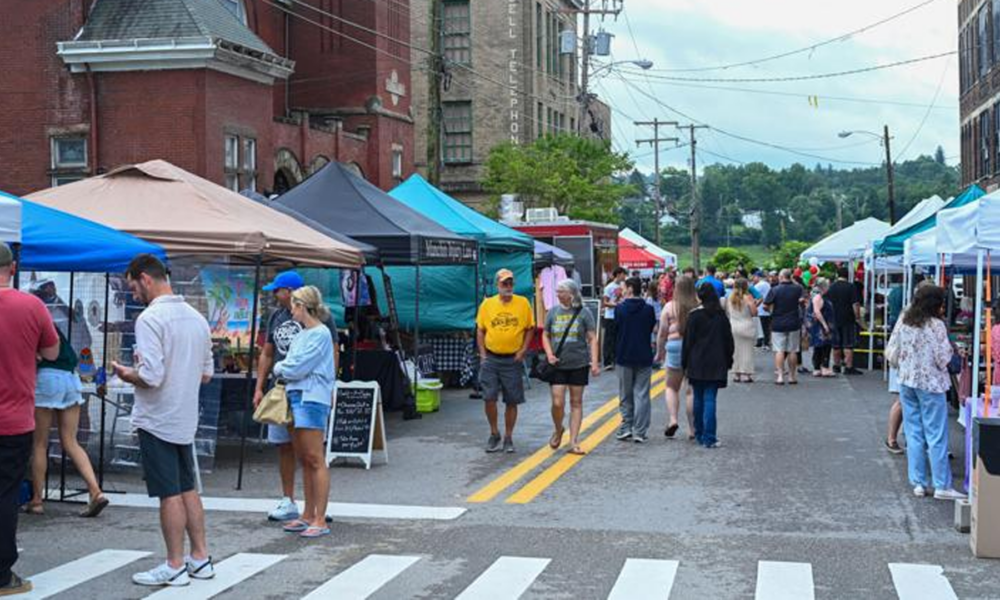
Fairmont — Thunderstorms saved the Hometown Market Feast in July from Canadian wildfire smoke on Saturday.
Main Street Fairmont’s newest celebration, the Feast in July, went well for the organization in its inaugural year. Alex Petry, executive director of Main Street Fairmont, said although Adams Street didn’t fill with vendors like he planned due to weather concerns, he was happy with the final outcome.
The clear air was a far cry from the day before, when thick smoke settled over Fairmont and the Marion County area, which created air quality concerns for residents.
“It was kind of bad,” Talia Feltz, of Fairmont, said. “But I work from home, so I wasn’t really out in it unless I had to take the dog out.”
Feltz and her friend, Anastasia Powell, attended Saturday’s Feast. Feltz said when she took her dog outside, she felt her eyes burn, so she limited her time outside as a result. Powell said there was nothing she could do about the air quality, so she tried not to stress about it.
Powell also had the luxury of staying indoors. But she worried about people who had no choice but to be outside because of their jobs.
“That just gets you into a whole slew of things,” Powell said. “With the price of everything, you can’t miss a day at work. Then you can end up with worse health problems after that.”
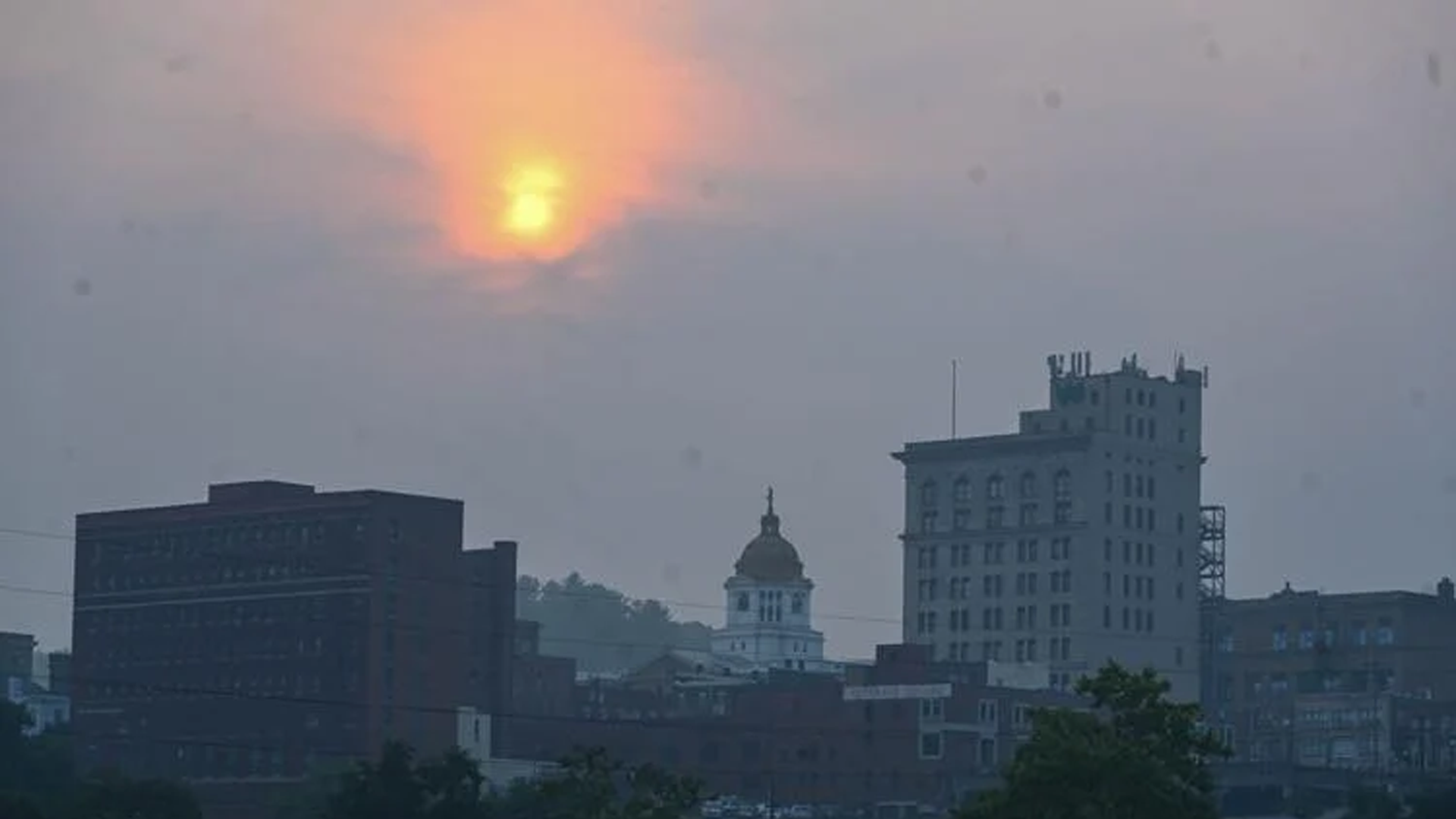
Bee Spiker, of Fairmont, said he had to take his son to day camp. Normally, they walk because they live next to Fairmont State University. The 15-minute walk provides the father-son pair with some bonding time. On Friday, instead of walking, the pair drove in Spiker’s car.
“He has some minor asthma, so I was definitely worried about making sure I didn’t let him go outside for too long and kept him inside,” Spiker said.
Spiker also worried about the unhoused who had to stay outside and breathe the smoke pollution all day. He floated the idea of the country sending firefighters to help control the burn happening in Canada right now.
By Monday, a thunderstorm system in the east buffered West Virginia from the smoke. However, the peak of fire season is still ahead.
Mark Olfert, associate professor in the School of Medicine Department of Physiology, Pharmacology and Toxicology at West Virginia University, said bad air quality can be a trigger for people who have pre-existing or underlying cardiovascular disease. There’s also scientific studies on animals that suggest the number of hospitalizations can start to increase as air pollution rises.
Olfert added West Virginia is high on the list for states suffering from respiratory diseases. Coal miners, who work in high degree of environment pollution, are a large part of the state’s work force. The state also has the highest percentage of smokers of all 50 states.
“We have a greater percentage of population who are going to be much more sensitive to air conditions like this when they occur, because they already have underlying respiratory complications or disease,” Olfert said.
The Canadian Climate Institute released a fact sheet stating human driven climate change from the burning of fossil fuels makes wildfires bigger, hotter and more destructive. Canada is warming twice as fast as the global average. Fire season is starting earlier and lasting longer, according to the institute. The warming climate also leads to decreased annual snow cover across Canada’s north in May and June, which leads to drier conditions which increase wildfire risk.
Olfert said the reality of climate change, whether man made or not, is unavoidable. There’s more and more extreme weather events happening due to climate change, as well as wildfires. Olfert said the political and emotional discussion around climate change overshadows the scientific discussion. Olfert said even rural places aren’t disconnected from the global impact of climate change.
“People used to think that, well, I’m going to go live in a rural area and so I won’t have all the problems of the big city,” Olfert said. “This is not the case. The pollution from the city, and in this case wildfires from another country, several hundred miles north of us, will start to move and they will move with the currents. It doesn’t matter how rural you are. We have conditions now that affect more than just the source of the pollution. It absolutely moves and impacts a much broader swath of the population.”
Read more from Times West Virginian, here