
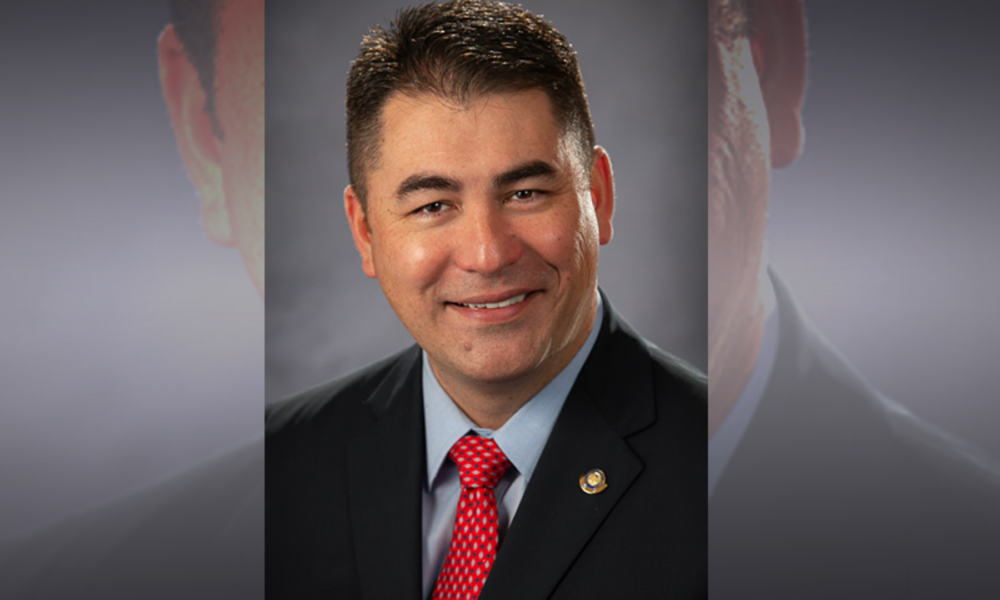



By Senator/Dr. Tom Takubo
For Senator/Dr. Tom Takubo
I went into pulmonology because West Virginia has some of the worst lung disease in the country.
Coal dust. Tobacco. Poverty. Environmental exposures that compound over decades and show up in my patients’ charts long after the damage is done. I trained at Marshall University, completed my residency at WVU, and came back to Charleston to build a practice and serve a state that needed physicians willing to stay.
What two decades of practice have taught me is that West Virginia’s health challenges are not random. They are the product of underfunding, under researching, and chronically underestimating the complexity of what serious illness actually does to people.
That is exactly the pattern I see playing out with myalgic encephalomyelitis/chronic fatigue syndrome — ME/CFS. And it is why Congress must act in this year’s federal spending bill to fund the research plan that has been waiting for resources since 2024.
ME/CFS is a serious, multisystem neuroimmune, neuroinflammatory disease — most commonly triggered by a viral infection — that affects an estimated 18,500 West Virginians. There is no FDA-approved treatment. There is no validated diagnostic test. Physicians across this state are seeing patients who cannot recover from an illness, whose fatigue never lifts, whose symptoms worsen with even minor exertion — and we have almost nothing to offer them.
As a clinician, that is not acceptable.
The National Institutes of Health’s (NIH) own research has documented dysregulated immune responses, autonomic dysfunction, and cellular-level abnormalities in ME/CFS patients. This is not a psychosomatic condition. It is a biological one — and it has been systematically underfunded for decades. NIH spends approximately a few million a year on ME/CFS research. For context, the disease costs the United States an estimated $362 billion annually in lost productivity and medical expenditures.
That gap is a policy failure, not a scientific one.
In West Virginia, the stakes are particularly high. Our state already carries one of the lowest median household incomes in the country. ME/CFS patients lose an average of 43 percent of their income to the disease. More than one in five leaves the workforce permanently. More than 60 percent rely on unpaid family members for care. In a state where families are already stretched, those numbers represent a catastrophic and largely invisible economic drain — one that compounds on top of every other health challenge West Virginia is already managing.
Nearly 20,000 West Virginians are living with this disease right now. Because most cases are never formally diagnosed, the true number is almost certainly higher.
But there is one bright spot: a plan to address ME/CFS exists for the first time.
The ME/CFS Research Roadmap, created by the NIH and approved in 2024, was developed by leading scientists, clinicians, and patients. It lays out exactly what needs to happen: biomarker discovery, a validated diagnostic test, and clinical trials for the most promising treatments. Congress recognized the roadmap last year and directed NIH to develop an implementation plan which it is working on now.
Fifty million dollars in the FY27 federal spending bill would activate it.
As a physician, I want to put that number in context. Fifty million dollars is less than one-seventh of one percent of ME/CFS’s estimated annual economic cost. It funds specific, measurable deliverables — research infrastructure, biomarker studies, diagnostic tool development, and clinical trials — with built-in congressional accountability requirements. This is not open-ended spending. It is a targeted investment in a plan that is already written and waiting.
Finding a cure for ME/CFS is a bipartisan undertaking. But as a physician and republican state legislator, I want to be direct about why Republicans should be leading this charge.
Two Democratic administrations had the opportunity to fund this research and did not. The current Congress and the current administration have aligned on ME/CFS in ways no previous administration managed.
West Virginia’s federal delegation has the seniority, the committee influence, and the moral authority to deliver what others could not. West Virginia — with some of the highest chronic disease burdens in the country and an estimated 18,500 residents living with a disease that medicine has no answer for — deserves to have its congressional leaders at the front of this fight.
The plan is written. The science is ready. West Virginia’s patients have waited long enough.
Dr. Tom Takubo is a West Virginia State Senator representing the 17th District.