


By Matt Sunday
For WVU, Today
The 2026 West Virginia University baseball team’s season concluded as national semi-finalists following a 12-7 loss to North Carolina, but it feels like the Mountaineers’ story is still just beginning.
Was it not just yesterday that Roger Clemens sat in the Hawley Field batting cage to watch his son, Kacy Clemens, play against the Mountaineers when he was at Texas? The year was 2014. Crowds were made up of friends and family, and WVU didn’t feel like the Big 12 baseball schools that started traveling to Morgantown after joining the conference.
Randy Mazey hijacked the script and WVU baseball started making a noise different than the one aluminum makes when it compresses leather-wrapped rubber bands.
A new ballpark provided the backdrop for the story.
Photos by Jenny Shephard and Matt Sunday for WVU, Today
The first year at Monongalia County Ballpark, in the days before it adopted the Wagener Field at Kendrick Family Ballpark name, Mazey spoke about the fans needing to learn to be baseball fans.
It wasn’t an insult — just the truth. Fans weren’t used to filling a stadium, standing and cheering through two-strike counts, or having a role to play in Mountaineer wins. But they did learn how, and the team evolved in front of them as the fans did for the team.
Mazey built it, and the fans did come. He built it so well that he came just short of bringing the Old Gold and Blue to Omaha on multiple occasions. He built it so well that when he decided to retire from coaching, he already had an assistant worthy of a coach-in-waiting title who he trusted to lead the program.
Steve Sabins took over in 2025, led the team to a record 44 wins, a Big 12 championship — the team’s first outright Big 12 title, and a Super Regionals berth.
All the team did in Sabins’ sequel was carry the momentum into Omaha for the Mountaineers’ first appearance at the College World Series, win a new record 47 games, and see Armani Guzman (42 steals) and Gavin Kelly (19 home runs, T-1st) set and tie single-season records.
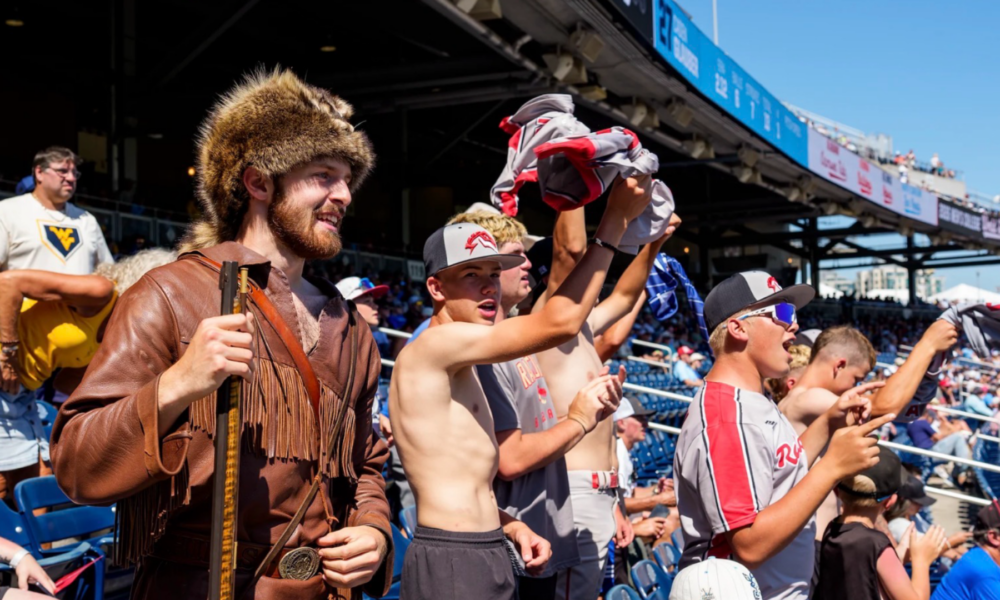
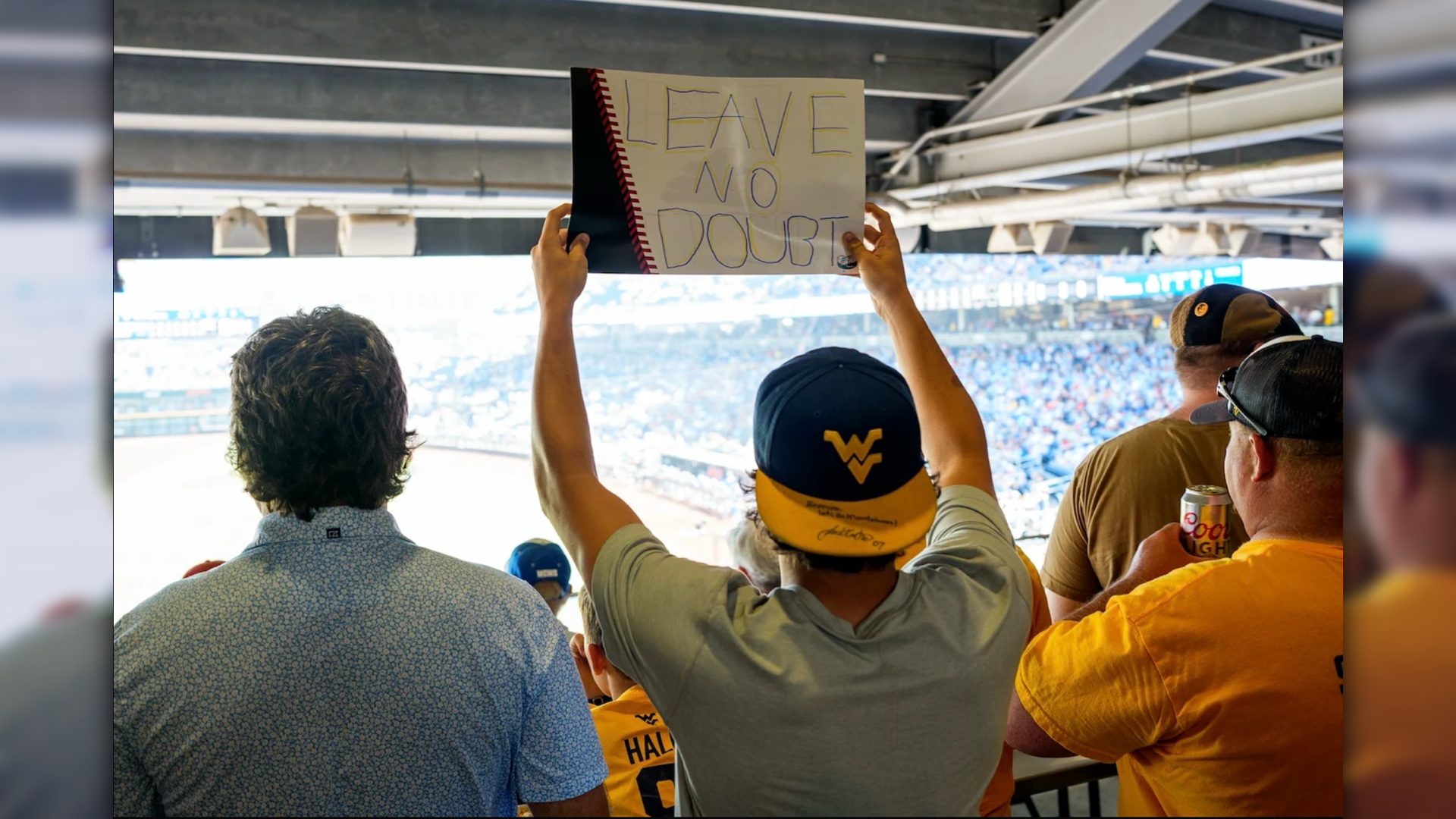
A 2-1 first inning, favoring UNC, developed into a 12-1 deficit. But Mountaineer mascot Reese Allen’s voice remained booming through the stadium, and the Mountaineer faithful remained vigilant in answering his “Let’s Go!” calls and player chants.
Then the neutrals joined in. The Little Leaguers twirled their shirts above their heads and relentlessly cheered for their new favorite team.
When the rally started with two outs in the 7th inning, it felt as though the entire stadium was clad in gold. Everyone wearing the other shade of blue was drowned into silence by the seas of Mountaineers, and it became impossible to decipher who started the day as a Mountaineer and who was acquired during the comeback efforts.
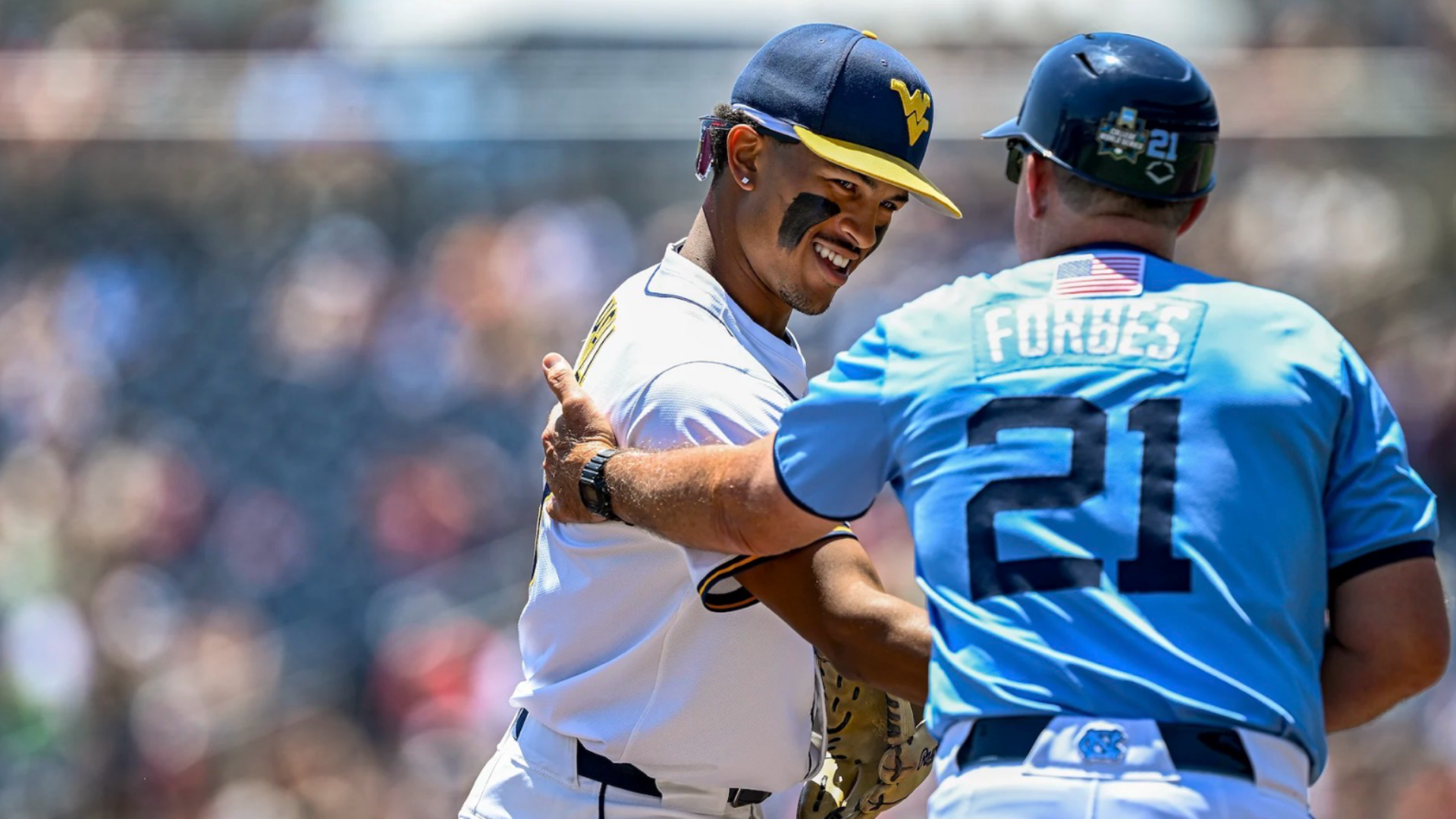
The Mountaineers scored five runs in that inning. Sophomore finance major Gavin Kelly hit his record-tying home run, a solo shot, in the 8th. And the score stayed just like that, 12-7. It never felt, though, like it was a five-run game. It never felt like it was an 11-run game. The players never gave up. The fans would have never let them.
Now, finishing 2026, only two teams will finish in a better spot than the Mountaineers — North Carolina and Oklahoma. They’re familiar programs to this baseball team. Oklahoma because of its previous Big 12 affiliation, and that one makes a lot of sense.
Photos by Jenny Shephard and Matt Sunday for WVU, Today
North Carolina, though? North Carolina has become a familiar foe in postseason baseball for the Mountaineers. To think that that’s a possible statement — West Virginia has an out-of-conference, postseason baseball rival — well, that just didn’t seem possible in 2014 when baseball legends watched baseball games from a batting cage on a hillside.
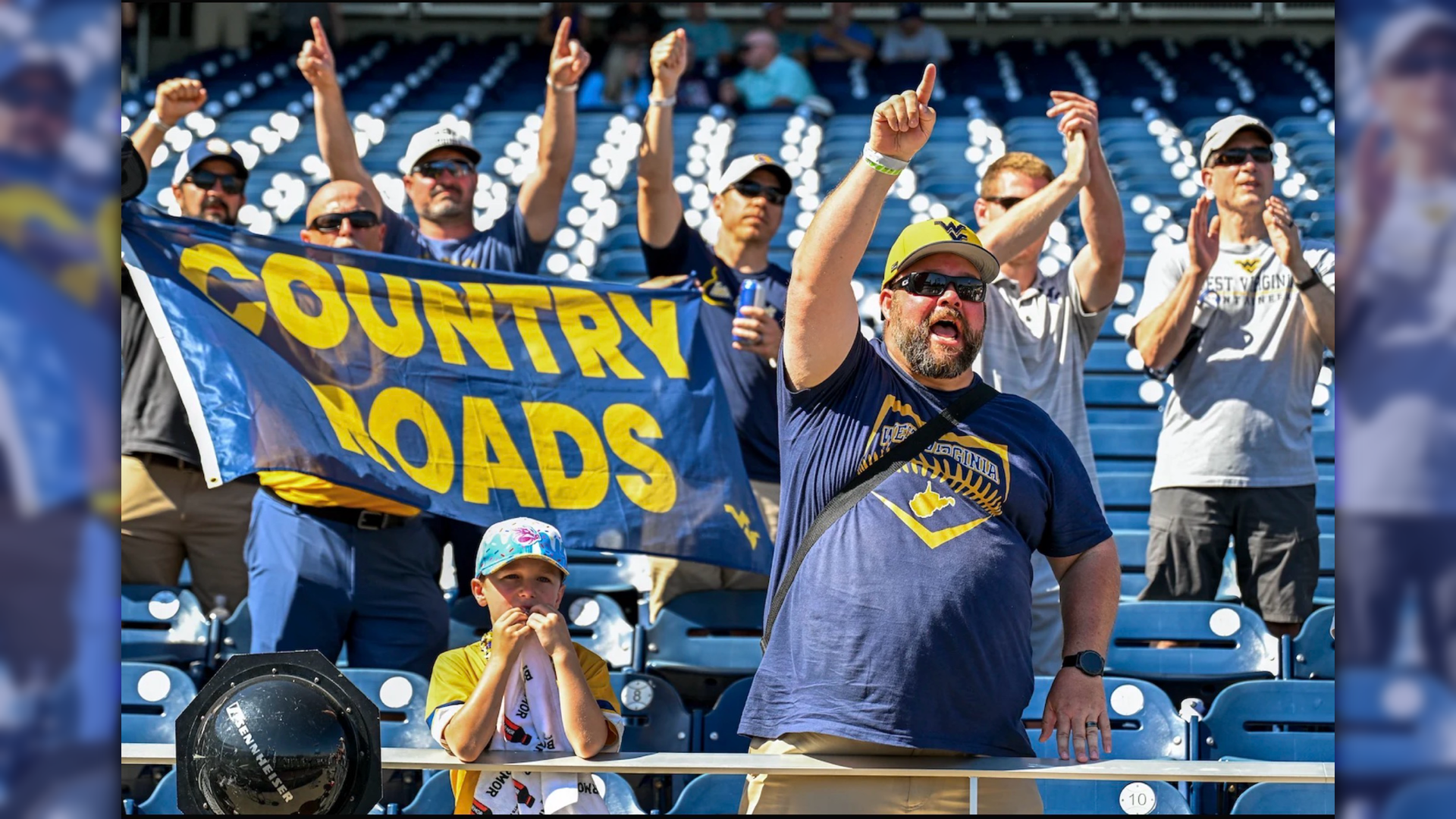
That is a lot of success built in a pretty condensed re-imagining of the baseball program. And that success has built a foundation, mortared by hope, for the families and friends, the University as a whole, and the neutrals hoping to catch a glimpse and a sound bite of the “Country Roads” moments that have captured the historic 2026 run.
Although the Mountaineers could not force a third game against the Tar Heels, the very hope that the last 12 years of foundation has built is what became the real story of the elimination match.
Mountaineer Nation was on its collective feet. Every good take at the plate, every two-strike count on the Mountaineer mound, every ball thrown by a UNC pitcher — they all led to smartwatches warning of high decibel levels. They all proved that as the Mountaineers became a College World Series-caliber program, WVU became a baseball school and the fans became the vision for what Mazey had when the team moved into its new home.
On the field, there is nothing you can do but be prepared, play baseball and know that anything can happen. In the stands, though? In the stands, all you can do is hope. Because it is baseball, and anything can happen.
Photos by Jenny Shephard and Matt Sunday for WVU, Today
All that is left to wonder is, what can happen next year? Anything is possible.
Read more from WVU, Today, here.