

By Jim Bissett
For The Dominion Post
Morgantown – You can learn a lot on a road trip.
Especially when you superimpose said map in relation to Juneteeth.
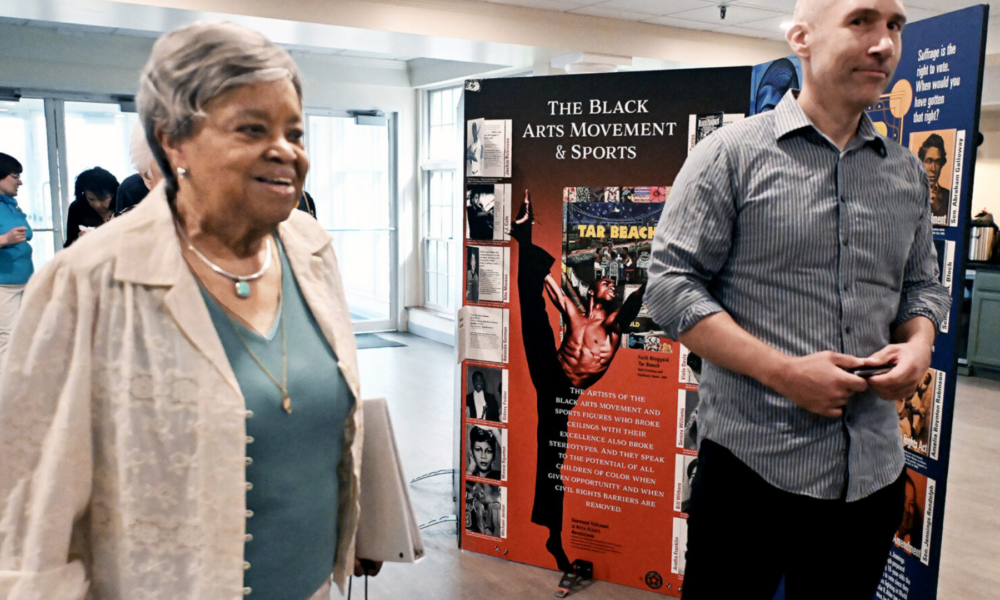
Charlene Marshall can explain.
Morgantown is hardly in the Heart of Dixie, yet it is located just below the Mason-Dixon line.
And that spot on the map, below that demarcation, as Morgantown’s former mayor would discover, carries implications that are just as sociopolitical as they are geographic.
Marshall was mayor of the University City from 1991-98.
Not only was she the first Black woman to hold that position here, she was the first Black woman at the time to be elected mayor of any municipality in West Virginia.
First ever.
As Morgantown mayor, and later as member of the state House of Delegates, she often traveled the country, attending conferences, workshops and the like.
People along the way were interested in the Black woman mayor from a place that didn’t always have a fix on its national identity – even if it was the only state in the union born of the Civil War.
Be it pigment, gender or politics, she made an impression.
And a lot of those people, as it turned out, already had West Virginia pegged on the map in their social subconsciousness.
One that ran counter to the mindset of the then-hearty western Virginians between the years of 1860-63 – denizens who preferred not to be associated with the Commonwealth as the clash between the Blue and the Gray bore even deeper.
That’s in the South, some people might marvel in Marshall’s direction, while not fully understanding the origin story.
As a leader and lawmaker, they would ask, how do you get by?
How do you maintain, they would query further, as a mom and shop steward – coincidentally, on an all-white production line in a factory where you were also the first women of color on payroll?
“I’d always answer the same way,” she said.
“I’d always talk about the good people in Morgantown and Monongalia County. I stood on a lot of shoulders to get where I am.”
On Friday, it’s officially Juneteenth in America.
Juneteenth.
Call it a shorthand-melding of month and date for the observance long deemed as America’s “second Independence Day.”
A day that jumped into the nation’s consciousness on June 19, 1865, when 250,000 Blacks – maybe more – were informed, two years after Abraham Lincoln’s Emancipation Proclamation, they were finally free of their enslavement.
Marshall grew up in the racially integrated Osage coal camp, before going on to graduate from the all-Black Monongalia High School here.
After that, she furthered her education in southern West Virginia at Bluefield State College, which was among the few institutions of higher learning that society said she could attend at the time.
For her, Juneteenth has always been a jumpstart to awareness. Which begats empathy, she said.
And empathy, she said, can always open the door to tolerance – and, more importantly – understanding.
This past Sunday at Suncrest United Methodist Church, Marshall was the guest of honor for the congregation’s Juneteenth service.
She took to the pulpit to tell stories of Black social pioneers in the Mountain State.
Marshall told accounts of Frank Cleckley, a civil rights attorney from Huntington who was renowned as a professor at the West Virginia University College of Law and later served as a justice on the state’s Supreme Court.
She tuned into the life and times of public television pioneer Carolyn Bailey Lewis, who helped create and broadcast the state’s efforts in that arena from Morgantown.
And she asked those in the pews to give a listen to Bill Withers, the soul-pop Everyman from Slab Fork, Raleigh County, who spun AM Radio gold in the early 1970s with “Ain’t No Sunshine,” “Lean on Me” and other playlist staples of the period.
“We need to know these stories,” Marshall said. “We need to know where we’ve been.”
Read more from The Dominion Post, here.