



By Mike Tony
For HDMedia
The West Virginia Department of Environmental Protection has proposed disposal deadlines and stipulated penalties to crack down on a Huntington steel mill operator that has failed to properly label and struggled to get rid of radioactive dust.
The DEP has made public a proposed consent order issued by its Division of Water and Waste Management to Steel of West Virginia, Inc., which generates “baghouse dust,” emission control dust and sludge from making steel in electric furnaces.
The order issued on May 14 would require Steel of West Virginia to dispose of baghouse dust showing radioactivity at out-of-state hazardous waste management sites by Oct. 31, report on its disposal progress and pay daily penalties of up to $1,500 per day for any order noncompliance.
Signed off on by Steel of West Virginia general manager Michael Winarta on May 21, the order is subject to a public comment period that ends June 27. Steel of West Virginia did not respond to a request for comment.
Wedged between Marshall University and the Ohio River in Huntington, Steel of West Virginia reported that 851 tons of baghouse dust with various amounts of radioactive Cesium-137 remained at the company’s site awaiting disposal as of April 9, according to the proposed order.
Cesium-137 is a radioactive form of cesium, a flexible metal that becomes liquid near room temperature. Cs-137 is extremely toxic even in small amounts, made from the detonation of nuclear weapons and in nuclear power plants. It’s produced via nuclear fission for use in medical devices and gauges.
Exposure to Cs-137 may cause acute radiation sickness and death and increase cancer risk due to exposure to high-energy gamma radiation, including through ingestion or inhalation, according to the Centers for Disease Control and Prevention.
Cs-137 was a contaminant in world’s worst nuclear power accident which took place in 1986 at a Chernobyl power station near the border of Belarus and Ukraine. The incident left an estimated hundreds of thousands of people dead, contending with radiation-induced illnesses or relocated to uncontaminated land.
DEP: Chicago site rejected load after high Cs-137 readings
The order indicates Steel of West Virginia qualifies as a large-quantity generator of hazardous waste, meaning it must comply with federal hazardous-waste regulations. Large-quantity generators generate more than 2,200 pounds of hazardous waste and 2.2 pounds of acute hazardous waste monthly.
Acute hazardous waste is fatal to humans and animals even in low doses, containing dangerous chemicals that threaten human health and the environment even when properly managed, according to the U.S. Environmental Protection Agency’s definition of such waste.
Steel of West Virginia, known as SWVA, offered for transport a 38,950-pound truckload of the hazardous-waste baghouse dust to a Chicago treatment, storage and disposal facility — Befesa Zinc US Inc. — on Aug. 20, 2024, according to the proposed order.
But the next day, when the load arrived at Befesa, the load caused the facility’s radiation portal to alarm before elevated readings of Cs-137 were detected, resulting in the load being rejected and transported back to SWVA, according to the proposed order.
Two days later, after notification from SWVA, DEP personnel, along with the federal Nuclear Regulatory Commission and other agencies, conducted an inspection of the facility that determined an unknown cesium source was mixed in with SWVA’s scrap feedstock that it had received, per the order. SWVA had contracted Kentucky-based environmental field services firm Chase Environmental to assist with the mixed waste management and disposal, the DEP said in its planned order.
SWVA on Nov. 15, 2024, submitted a hazardous waste storage time limit extension request due to difficulties in finding a treatment, storage and disposal facility to take the baghouse dust containing elevated radiation levels, which prompted a facility inspection three days later, per the proposed order.
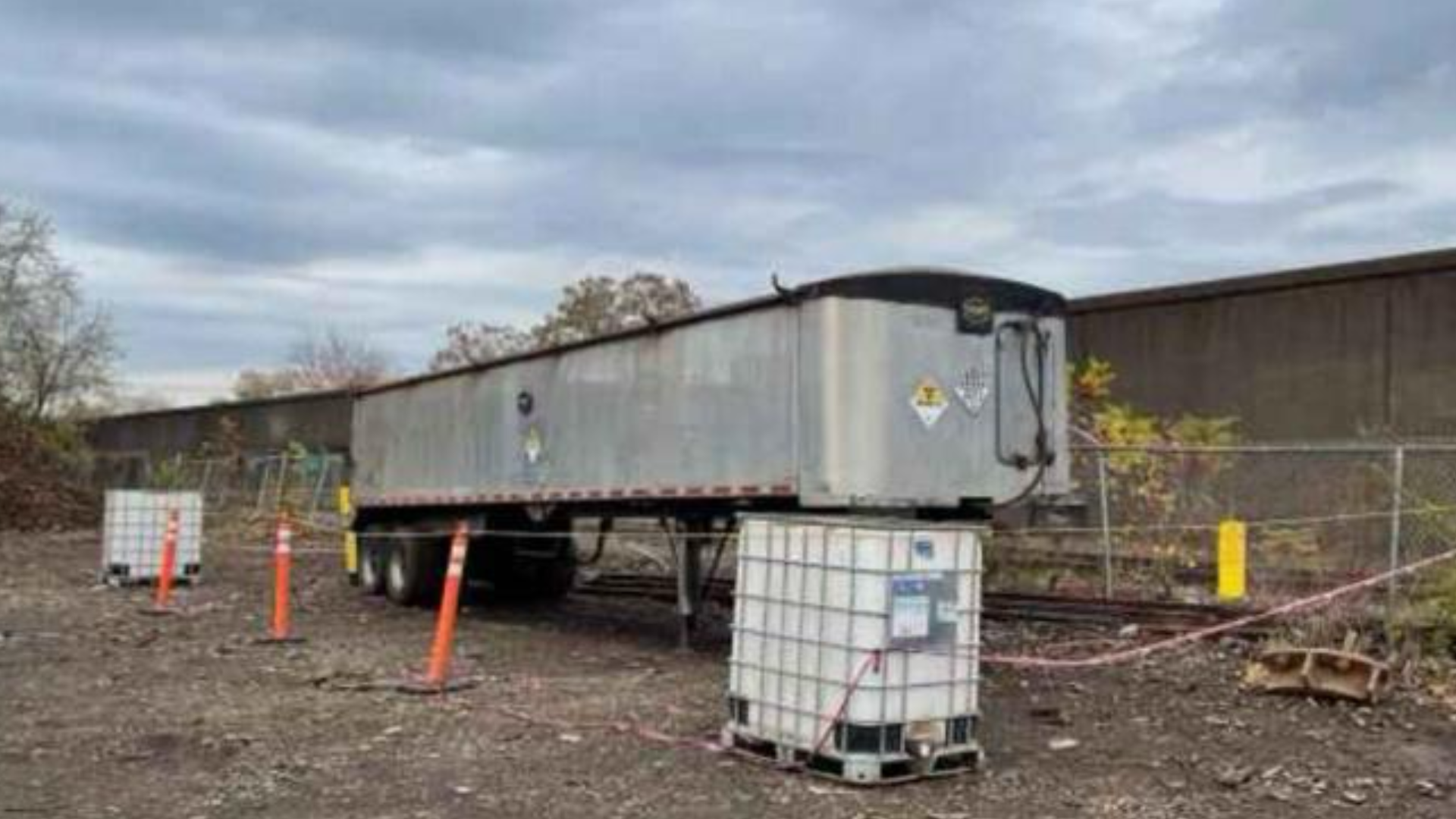
During that inspection, federal code violations were observed and documented, according to the order, which reports that SWVA failed to label hazardous waste storage containers (truck trailer and railcar) with the words “Hazardous Waste,” indication of the hazard of the contents and the accumulation start date as federally required, according to the proposed order.
The planned order states that SWVA personnel said Andrews, Texas-based treatment, storage and disposal facility Waste Control Specialists would accept the radioactive hazardous waste containing more than 2 picocuries per gram, a measure of the radioactivity in a gram of a material.
The DEP on Nov. 22, 2024, granted a 30-day storage time limit extension request to SWVA for the baghouse dust accumulating in a truck trailer, according to the proposed order — 18 days before the proposed order says SWVA provided documentation that the three violations during the Nov. 18 inspection had been corrected prior to a Notice of Violation being issued.
The DEP granted two 30-day storage time limit extension requests for the dust accumulating in a truck trailer and railcar in December 2024 and January 2025, according to the proposed order.
SWVA super-sack spill of dust reported in September
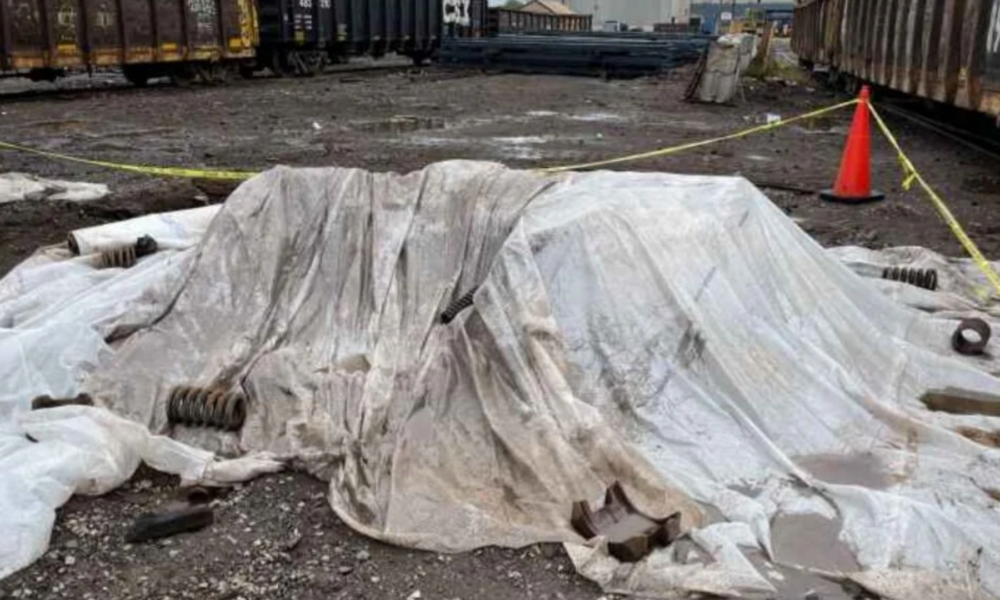
DEP personnel on Sept. 4, 2025, conducted an inspection related to a reported spill of the baghouse dust that originated from a full super sack, or heavy-duty bulk container, that was loaded into a container, according to the proposed order.
The planned order states that a similar-style railcar was intended to be cut for scrap, but personnel inadvertently moved the railcar loaded with hazardous waste into position — and that the railcar was knocked over to start the scrapping process when it was noted the super sack had spilled out.
SWVA personnel estimated 40 pounds of hazardous waste contacted the ground, according to the proposed order. The hazardous waste and surrounding soil were cleaned up, and SWVA’s onsite contractor, Chase Environmental, screened for radiation to confirm no residual contamination, per the proposed order.
The DEP said it granted a 30-day storage time limit extension request to SWVA for the baghouse dust accumulating in 67 super sacks on Dec. 10, 2025, 27 days after it received the request, according to the proposed order.
But a week after the request was granted, SWVA contacted the DEP to clarify that additional super sacks of the baghouse dust also required storage time limit extensions due to them accumulating onsite for the majority of 2025 because of issues with finding mixed-waste treatment, storage and disposal facilities that could accept the baghouse dust with concentrations of Cs-137, per the proposed order.
The DEP and SWVA on Jan. 7, 2026, had a conference call to discuss the status of the hazardous waste, storage and disposal facility and intent to change the treatment where it is sent for disposal, per the proposed order, which added that SWVA said that Befesa still wouldn’t take the waste if it had any radiological readings.
SWVA said it was in negotiations to send the hazardous waste with fewer than 2 picocuries per gram of Cs-137 to Grand View, Idaho-based special waste disposal services provider Republic Services, according to the proposed order.
SWVA said the furnaces in the melt shop that generated the baghouse dust would permanently shut down “due to a variety of factors,” according to the proposed order, which did not detail those factors.
SWVA provided the DEP with correspondence five times over the next three months describing proposed plans for addressing the backlog and accumulation of the hazardous waste, including provisions for properly managing it in the future, per the planned order.
In the final correspondence over that span on April 17, SWVA stated the baghouse dust would be properly disposed of by Oct. 31, 2026, the proposed order says.
Penalties set for any noncompliance, reporting failures
SWVA must dispose of baghouse dust showing radioactivity at either Republic Services in Idaho or Waste Control Specialists in Texas by Oct. 31, per the proposed order, which required SWVA to submit for approval a target date that 50% of all baghouse dust showing radioactivity must be disposed of.
The proposed order requires that on the 10th day of each month, SWVA is to provide a progress report documenting disposal activities for the previous month, including the amount of baghouse dust radioactive waste disposed of, how much remains onsite, how much was generated in the reporting period, any unforeseen issues regarding waste generation, accumulation, transportation or disposal, and copies of reports documenting inspections of the accumulation areas.
Failing to achieve any compliance milestone would trigger stipulated penalties of $500 per day for days one through 14, $1,000 daily for days 15 through 30 and $1,500 per day for days 31 and beyond, according to the proposed order.
For each violation of any reporting requirement, the planned order would set stipulated penalties of $200 per day per violation for days one through 14, $400 daily for days 15 through 30 and $600 per day for days 31 and beyond.
Read more from HDMedia, here.