


What happens when community resources connect? Amazing things.
By Canyon Lohnas, program specialist with the West Virginia Public Education Collaborative at West Virginia University
What do your local library, a revitalized toy store and an up-close exploration of beehives have in common? They’re all helping today’s students learn both the social and technical skills they’ll need to excel in the jobs of tomorrow.
And thanks to some unexpected partnerships between schools, museums, community centers and even small businesses, families across West Virginia are discovering something powerful: with a bit of creativity and collaboration, any place can become an exciting space for career-focused learning.
This kind of statewide innovation in education is increasingly important as the job market continues to change rapidly. According to a deep dive into West Virginia’s employment trends conducted by data analysis firm Stacker, the fastest-growing jobs across the state vary widely, from claims adjusters and computer analysts to component manufacturers and heavy equipment operators. While each of these jobs requires a vastly different skillset, the employers who are hiring for them will be seeking in-demand skills such as: critical thinking, clear communication, meticulous attention to detail, and the ability to collaborate well with others — and all of these are skills that today’s students can sharpen through the power of hands-on learning.
In order to have an impactful hands-on learning experience, students need two things: awareness and access. That’s where libraries, museums and even a toy store can make a big difference in ensuring that kids and families have a range of learning experiences available to them, especially in our most economically disadvantaged neighborhoods and our most geographically disconnected rural communities.
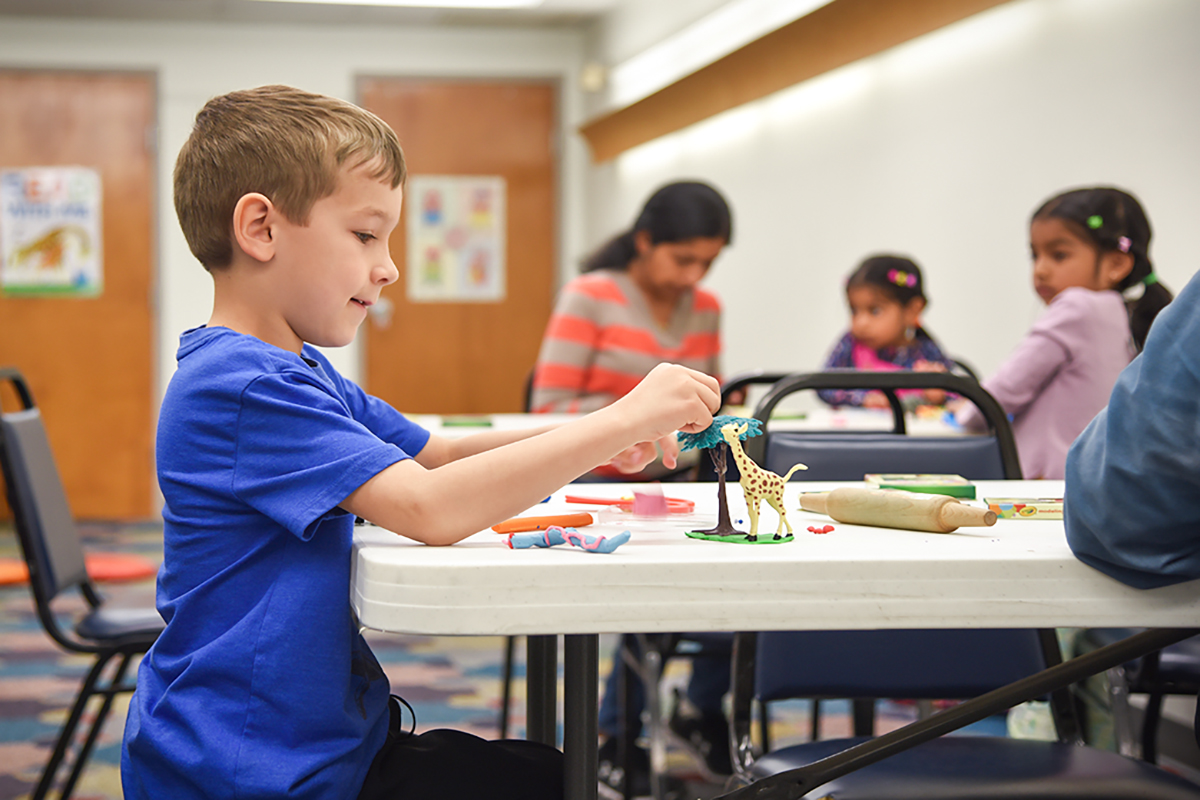
Remake Learning Days is an annual family-friendly learning festival that has been igniting the imaginations of West Virginia’s learners since 2016. By encouraging community members to offer interesting hands-on learning experiences for low or no cost, kids get the opportunity to build, create, problem-solve and collaborate in real-world settings ranging from farms to museums. This year’s RLD offerings include recipe-making with West Virginia University Extension, a storytime garden walk at Pinocchio’s Books and Toys in Morgantown, an exploration of AI using Intelino Smart trains with the STEAM Technical Assistance Center in Philippi, an interactive celebration of World Bee Day at Eastwood Elementary School, plus dozens of other events that are sure to spark students’ ideas and interests.
These events give kids the chance to engage in memorable learning activities that they don’t often experience in the classroom. Plus, by inviting participation from parents and grandparents, these events also give kids the chance to learn right alongside their families. Not only does multigenerational learning help strengthen family bonds through shared experiences and the creation of collaborative solutions, but it also helps kids and adults develop mutual respect for the unique knowledge and abilities that each of them brings to the table.
As a member of the West Virginia Public Education Collaborative, one of the most impactful realizations I’ve seen from parents and educators is that the process of learning doesn’t always have to occur within the classroom itself. We’ve worked to develop learning events in partnership with the local tourism bureau, West Virginia University Extension, local businesses, religious organizations, museums, libraries, public parks and many other groups. These spaces don’t always think of themselves as being sites for learning, but they have the potential to host exciting experiences for learners of all ages. Plus, once families see what these sites have to offer, they can make better use of these resources all year long.
In 2024, just 47% of West Virginia high school graduates chose to enroll in college, down from nearly 53% in 2013. With more of today’s high school grads looking to either enter the workforce directly or enroll in trade school, it’s more important than ever for elementary and middle school educators to encourage a wide variety of career paths our children can choose to follow.
Let’s urge our communities to think outside the box when it comes to providing year-round educational opportunities for students and adults alike, especially in areas like sports, business, nature and other fields where communication and creativity come together. The earlier a child becomes interested in potential careers, and the more they understand about the talents and abilities those careers require, the better prepared they’ll be for the swiftly-changing jobs of tomorrow.
— Canyon Lohnas is a program specialist with the West Virginia Public Education Collaborative at West Virginia University, a center committed to advancing public schools in West Virginia from early childhood through higher education.